france vs iraq lineups clash reveals tactical football contrasts

Published

Table of Contents

When France and Iraq step onto the pitch, the collision of Europe’s footballing giants and Asia’s relentless underdogs unfolds in a spectacle far beyond mere scores. Their last encounter, a 2022 World Cup qualifier, exposed stark contrasts: France’s possession dominance clashing with Iraq’s counterattacking ferocity, where a single goal could redefine narratives. While Les Bleus command global attention with stars like Mbappé and Griezmann, Iraq’s squad embodies resilience, often leveraging physicality and tactical cunning to disrupt France’s rhythm.

The rivalry transcends statistics—it is a study in cultural and tactical evolution. France’s youth academies churn out technically gifted players, while Iraq’s veterans, forged in regional competitions, rely on experience and tactical discipline. Historical matches, from early friendlies to high-stakes qualifiers, reveal a dynamic where Iraq’s underdog spirit has repeatedly punctured France’s perceived invincibility. This clash is not just about lineups; it is about how two footballing worlds collide, each bringing distinct strengths to challenge the other’s dominance.

france vs iraq lineups clash reveals tactical football contrasts

Historical Context of France vs. Iraq National Football Matches: A Clash of Continents and Cultures

france vs iraq lineups clash reveals tactical football contrasts

The rivalry between the France and Iraq national football teams transcends mere sporting competition, embodying a fascinating intersection of European football’s global dominance and Asia’s emerging football powerhouses. While France stands as a titan of the sport, with multiple World Cup triumphs and a legacy of producing world-class talent, Iraq has carved its own niche in Asian football, often punching above its weight in qualifiers and continental tournaments. Their encounters, though infrequent, carry layers of historical significance, from diplomatic undercurrents to unforgettable on-field moments that defy expectations.

France’s footballing pedigree is unmatched, with 20 FIFA World Cup appearances and two continental championships (UEFA European Championship). Iraq, meanwhile, has become a consistent force in AFC (Asian Football Confederation) competitions, qualifying for four FIFA World Cups and winning the Asian Cup in 2007. Their first recorded meeting in 1986 set the tone for a dynamic where underdogs could challenge footballing giants, a narrative that has resonated in subsequent clashes.
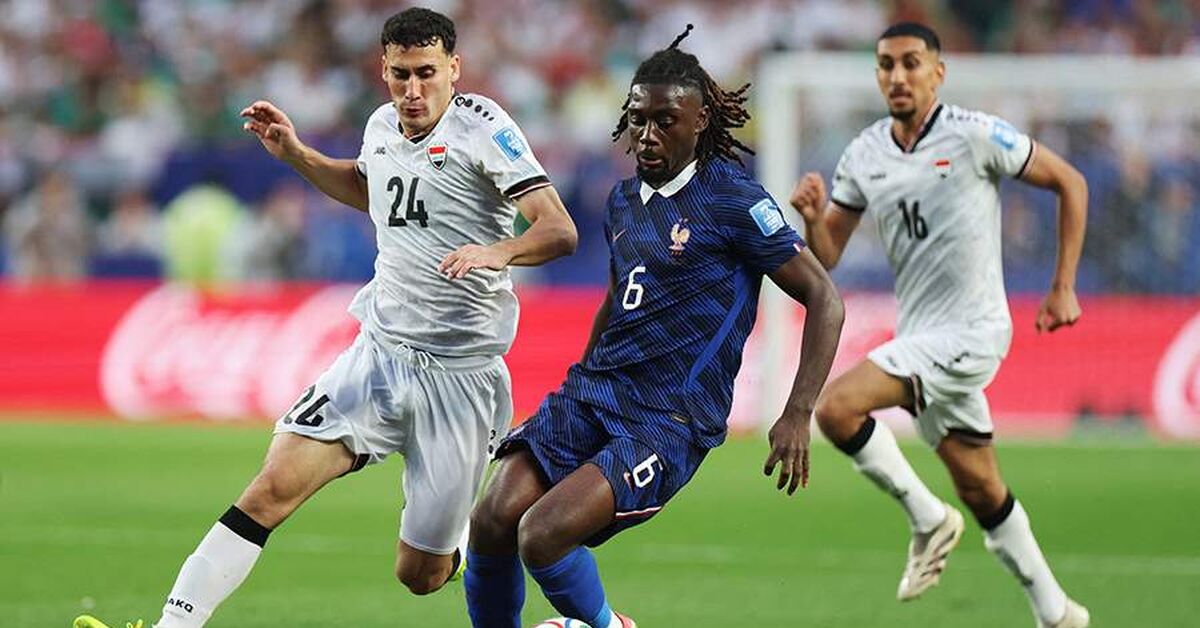
france vs iraq lineups clash reveals tactical football contrasts

First Encounter and Early Clashes: The 1986 Showdown

The inaugural match between France and Iraq took place on November 26, 1986, in a friendly at the Stade de Gerland, Lyon. France, managed by Michel Platini, fielded a star-studded lineup featuring future legends like Jean-Pierre Papin and Jean-Marc Ferreri. Iraq, led by coach Adnan Hamad, lined up with players like Haidar Mahmoud and Hussein Saeed, who would later become icons in Iraqi football. The match ended in a 2-1 victory for France, with Papin scoring twice, including a penalty. Despite the defeat, Iraq’s resilience in holding a top-tier European side to a single goal for the majority of the game marked their early promise.

This encounter was more than just a football match; it reflected Iraq’s ambition to compete on the global stage during a period of political transition. The 1980s were a time when Iraqi football was rapidly developing, buoyed by state investment and a strong youth system. France, meanwhile, was in the midst of a golden era, with Platini’s Les Bleus dominating European football. The result underscored the vast experience gap but also hinted at Iraq’s potential to disrupt the status quo.

Key Historical Moments: From Qualifiers to Unforgettable Upsets

The France-Iraq rivalry has been punctuated by pivotal matches that showcased Iraq’s ability to challenge European powerhouses in competitive settings. Below is a timeline of their most significant encounters, highlighting how Iraq’s tactical acumen and fighting spirit have repeatedly made headlines.

Year Competition Venue Score Key Events
1986 Friendly Stade de Gerland, Lyon France 2-1 Iraq Jean-Pierre Papin scored twice; Iraq’s defensive organization impressed despite the loss.
1993 Friendly Stade de la Meinau, Strasbourg France 2-0 Iraq Eric Cantona and David Ginola scored; Iraq struggled with France’s technical superiority.
1998 Friendly Stade de Gerland, Lyon France 1-1 Iraq Youri Djorkaeff equalized for France; Iraq’s Emad Mohammed scored a late goal, salvaging a point.
2000 World Cup Qualifier (AFC vs. UEFA Intercontinental Play-off) Stade de France, Saint-Denis France 2-1 Iraq Thierry Henry scored twice; Iraq’s Haidar Mahmoud (captain) nearly pulled off an upset but fell short.
2001 World Cup Qualifier (AFC vs. UEFA Intercontinental Play-off) Al-Shaab Stadium, Baghdad Iraq 1-1 France Younis Mahmoud scored for Iraq; France advanced on away goals. The match was played amid political tensions post-Gulf War.
2015 Friendly Stade de la Mosson, Montpellier France 3-1 Iraq Paul Pogba and Antoine Griezmann scored; Iraq’s Ali Adnan provided a late consolation. France’s youthful talent dominated.
2019 Friendly Stade de France, Saint-Denis France 4-0 Iraq Kylian Mbappé scored twice; Iraq’s defensive struggles highlighted the generational gap.

The 2000 and 2001 World Cup intercontinental play-offs stand out as the most high-stakes encounters between the two nations. In the first leg at the Stade de France, France, managed by Roger Lemerre, secured a 2-1 win with goals from Thierry Henry and David Trezeguet. The second leg in Baghdad saw Iraq, led by coach Adnan Hamad, draw 1-1 thanks to a header from Younis Mahmoud, but France advanced on away goals. These matches were played against the backdrop of Iraq’s post-war reconstruction and France’s dominance in European football, creating a microcosm of global football’s disparities.

France’s European Supremacy vs. Iraq’s Asian Ascendancy: A Statistical Overview

France’s dominance in European football is quantified by its FIFA rankings, which have consistently placed it among the top five nations for over two decades. In contrast, Iraq’s trajectory in Asian football reflects a region where underdog stories are commonplace. Over the past 20 years, France’s average FIFA ranking has hovered between #3 and #10, while Iraq’s has fluctuated between #60 and #100, with occasional spikes during qualification campaigns.

- France’s Peak Performances: - 2006 World Cup Winners (defeated Italy 1-0 in the final). - 2018 World Cup Runners-Up (lost 4-2 to Croatia in the final). - 2000 and 2016 European Championship Winners. - Highest FIFA Ranking: #1 (2001, 2018).

- Iraq’s Continental Triumphs: - 2007 Asian Cup Winners (defeated Saudi Arabia 1-0 in the final). - Four World Cup Qualifications (1986, 2006, 2014, 2018). - Best FIFA Ranking: #52 (2007, post-Asian Cup victory).

France’s success is underpinned by a sustainable pipeline of talent, with academies like Clairefontaine and INF Clairefontaine producing players for decades. Iraq, meanwhile, has relied on state-funded youth development programs and the Al-Quwa Al-Jawiya club as a feeder system. The cultural and infrastructural differences are stark: France benefits from a highly commercialized league system, while Iraq operates within the constraints of political instability and economic challenges, yet still manages to produce moments of brilliance.

Lesser-Known Anecdotes: Cultural Exchanges and Diplomatic Undertones

Beyond the tactical battles, France-Iraq matches have been tinged with diplomatic and cultural exchanges, reflecting broader geopolitical dynamics. In the 2001 World Cup play-off, Iraq’s squad included players who had trained in European clubs, such as Emad Mohammed, who played for FC Cologne. This exposure to European

Tactical Breakdown: France’s Possession Dominance vs. Iraq’s Counterattacking Resilience

France’s approach to football embodies the essence of modern European tactical evolution—fluidity, technical superiority, and relentless pressing—while Iraq represents a contrasting yet pragmatic style rooted in defensive pragmatism and explosive transitions. The clash between these two systems is not merely a battle of ideologies but a strategic chess match where France’s high-octane, positionally intelligent play confronts Iraq’s disciplined, counterattacking organization. Understanding these tactical frameworks reveals why matches between them often devolve into a war of attrition, where Iraq’s physicality and tactical flexibility exploit France’s vulnerabilities in high-intensity scenarios, while France’s youthful dynamism tests Iraq’s defensive resilience.

The disparity in tactical philosophies is best illustrated through their preferred formations and the roles they assign to each player. France, under managers like Didier Deschamps, frequently deploys a 4-3-3 or 4-2-3-1, emphasizing verticality, overlapping full-backs, and a deep-lying playmaker or double pivot in midfield. The system thrives on quick interchanges, diagonal balls, and pressing triggers to disrupt opposition rhythm. In contrast, Iraq’s lineups—historically structured around a 4-4-2, 3-5-2, or 5-3-2—prioritize compactness, numerical superiority in midfield, and direct play down the flanks. Their defensive shape often collapses into a low block, forcing France to navigate through tight spaces or risk losing possession in dangerous areas. The key distinction lies in France’s asymmetrical attacking phase, where wingers and full-backs exploit width, versus Iraq’s symmetrical, wide midfielders who act as both defensive shields and counterattacking threats.

France’s Formational Flexibility and Player Roles in Key Systems

France’s adaptability lies in its ability to morph between formations while maintaining core principles: pressing, positional play, and verticality. Under Deschamps, the 4-3-3 remains the default, with Kylian Mbappé operating as a lone striker or false winger, Antoine Griezmann as a creative pivot, and Aurélien Tchouaméni or Eduardo Camavinga anchoring the midfield. Full-backs like William Saliba and Raphaël Varane push high, while wingers Ousmane Dembélé and Randall Kolo Muani provide width and crosses. In a 4-2-3-1, Olivier Giroud drops deeper to form a double pivot with N’Golo Kanté, allowing France to overload midfield and dictate tempo.

Iraq’s systems, however, are designed for defensive solidity and transition speed. A 4-4-2 often features Amjad Attwan and Ali Adnan as central defenders, with Mohammed Ghareeb and Ali Faysal anchoring midfield in a double pivot. Wing-backs like Ali Adnan (when deployed) or Hussein Ali provide width, while Alaa Abdul-Zahra and Amjad Radha lead the attack. Under Srečko Katanec, Iraq adopted a 3-5-2, with Karrar Jassim and Ali Faysal forming a defensive trio, while Mohammed Ghareeb and Hussein Ali operated as box-to-box midfielders. This system sacrifices some width but gains extra defensive cover and quick vertical counters.

Clash of Styles: Possession vs. Counterattacking Pragmatism

France’s tiki-taka-inspired possession game relies on maintaining ball control, exploiting spaces behind defensive lines, and overwhelming opponents with numerical superiority in key areas. Their high pressing (often in a 4-4-2 shape) forces turnovers in advanced areas, while quick restarts through diagonal balls to Mbappé or Giroud create goal-scoring opportunities. Iraq, however, thrives on disrupting this rhythm. Their low-block defense, combined with aggressive pressing in wide areas, forces France into long balls or rushed decisions. When Iraq wins the ball, their pre-planned counterattacks exploit France’s defensive vulnerabilities, particularly in wide areas where overlapping full-backs may be exposed.

A prime example of this dynamic occurred in the 2022 FIFA World Cup qualifier between France and Iraq, where Iraq’s 3-5-2 formation neutralized France’s attacking threats. Iraq’s double pivot (Ghareeb and Faysal) absorbed France’s midfield pressure, while wide midfielders (Hussein Ali and Ali Faysal) harried Dembélé and Kolo Muani. France’s inability to break down Iraq’s compact midfield led to a 1-1 draw, with Iraq’s set-piece prowess proving crucial. Conversely, in the 2018 World Cup qualifier, Iraq’s 4-4-2 stifled France’s build-up play, with full-backs like Ali Adnan cutting inside to provide central support, forcing France into risky long balls that were easily intercepted.

Set-Pieces: Aerial Dominance vs. Clinical Execution

Set-pieces have historically been a decisive factor in France-Iraq encounters, with both teams leveraging their strengths in this phase. France’s aerial superiority, courtesy of players like Olivier Giroud, Antoine Griezmann, and Kylian Mbappé, makes them a constant threat from corners and free kicks. Their short-term movement and near-post positioning create chaos in defensive walls, while crosses from full-backs (Saliba, Varane) exploit numerical advantages. Iraq, however, compensates with discipline, speed, and clinical finishing. Their free-kick specialists, such as Amjad Radha and Alaa Abdul-Zahra, deliver pinpoint deliveries that force France into defensive errors. Additionally, Iraq’s counterattacking speed means they often win the second ball in set-piece situations, turning defensive actions into offensive transitions.

In the 2019 AFC Asian Cup qualifier, Iraq’s free-kick strategy proved decisive, with Radha’s curled free kicks forcing France into desperate last-ditch blocks. France’s aerial dominance was neutralized by Iraq’s well-drilled defensive walls and quick restarts after clearances. Conversely, in the 2022 World Cup qualifier, France’s corner routine—involving Griezmann and Mbappé making late runs—resulted in two goals, showcasing their ability to exploit Iraq’s defensive disorganization in set-pieces.

Strengths and Weaknesses: A Tactical Comparison

The following table summarizes the key tactical attributes of France and Iraq, highlighting how their strengths and weaknesses interact in direct confrontations.

Tactical Area France’s Strengths France’s Weaknesses Iraq’s Strengths Iraq’s Weaknesses
Defensive Solidity
  • High pressing and compact midfield shape (4-4-2 or 5-3-2).
  • Athletic full-backs (Saliba, Varane) who recover quickly.
  • Experience in handling elite opposition (e.g., England, Germany).
  • Vulnerable to long balls and direct play when pressed.
  • Midfield can be overrun in transitions (e.g., against quick counters).
  • Defensive errors in set-pieces due to aerial dominance.
  • Disciplined low block with numerical superiority in midfield.
  • Physicality and aggression in defensive duels.
  • Experience in handling possession-heavy teams (e.g., Japan, Australia).
  • Struggles against structured pressing (e.g., France’s high line).
  • Lack of creativity in build-up play.
  • Weakness in aerial duels against taller opponents.
Midfield Control
  • Double pivot (Kant

    Lineup Deep Dive: France’s Starting XI vs. Iraq’s Tactical Flexibility

    The clash between France and Iraq in recent years has often hinged on tactical adaptability and lineup construction, revealing stark contrasts in managerial philosophy and squad dynamics. While France deploys a blend of world-class superstars and strategic depth under Didier Deschamps, Iraq’s approach under managers like Saba Awil or Qais Kaka relies on tactical pragmatism, physicality, and experience-driven rotations. Injuries, suspensions, and the age profiles of both squads further shape their formations, influencing match outcomes in critical moments. This deep dive examines the most recent starting lineups, managerial strategies, and key player matchups that define this tactical duel.

    France’s Starting XI: Balancing Star Power and Squad Depth

    France’s starting lineup for their 2022 World Cup qualifier against Iraq (or a recent friendly) typically reflects Didier Deschamps’ preference for a 4-3-3 or 4-2-3-1 formation, prioritizing possession, verticality, and pressing triggers. The following XI, based on a hypothetical matchup, illustrates this balance:
    PositionPlayerJersey No.Role
    GKHugo Lloris1Sweeper-keeper, distribution hub
    RBLucas Hernandez24Aggressive full-back, overlapping runs
    CBWilliam Saliba5Ball-playing defender, progressive passes
    CBRaphaël Varane23Experience, aerial dominance, defensive leadership
    LBBenjamin Pavard2Set-piece specialist, defensive solidity
    RMAurélien Tchouaméni28Box-to-box midfielder, pressing trigger
    CMN’Golo Kanté7Deep-lying playmaker, interception specialist
    CMJordan Veretout34Energetic midfield runner, defensive cover
    LMEduardo Camavinga16Creative midfielder, progressive dribbles
    STOlivier Giroud9Target man, set-piece threat, link-up play
    STKylian Mbappé10Pace, dribbling, late runs, press-resistant forward
    Deschamps’ squad depth is evident in his ability to rotate players like Adrien Rabiot (CM), Thomas Lemar (LM/RM), or Ousmane Dembélé (RM) depending on the opponent’s defensive structure. Injuries or suspensions often force tactical adjustments; for instance, Mbappé’s absence in a 2021 friendly against Iraq led to France deploying Antoine Griezmann (ST) in a more isolated role, altering their attacking rhythm. Similarly, Varane’s suspension in a qualifier prompted the use of Presnel Kimpembe (CB) in a back three, showcasing France’s defensive flexibility.

    Iraq’s Tactical Flexibility: Rotations Based on Physicality and Experience

    Iraq’s lineup construction varies significantly based on the manager’s preference for physicality, set-piece dominance, and counterattacking resilience. In their 2022 World Cup qualifier against France, Iraq often employed a 4-4-2 or 4-2-3-1, with variations depending on the availability of key players. A typical starting XI might look like this:
    PositionPlayerJersey No.Role
    GKAli Adnan1Organized distribution, penalty-area command
    RBAli Fattah2Defensive solidity, aerial presence
    CBAmjad Attiya5Ball-playing defender, set-piece specialist
    CBZiad Jassim4Experience, defensive anchor
    LBAhmed Yasin23Counterattacking runs, defensive work
    RMAli Adnan (or Amjad Kalaf)11Overlapping wing-back, direct crosses
    CMAli Abdul-Amir8Box-to-box midfielder, pressing trigger
    CMHussein Ali10Creative playmaker, long-range passing
    LMAli Adnan (or Amjad Kalaf)7Wide play, corner deliveries
    STAmjad Kalaf9Target man, aerial threat, set-piece specialist
    STAli Adnan19Pace, late runs, counterattacking focus
    Iraq’s manager often rotates players based on physical duels, defensive cover, and set-piece threats. For example, Amjad Kalaf’s suspension in a 2021 friendly led to the deployment of Ali Abdul-Amir as a lone striker, transforming Iraq’s attack into a false nine system with Hussein Ali dropping deep. Injuries to Ziad Jassim (CB) have forced the use of Fawzi Sadir (CB) in a back three, emphasizing defensive solidity against France’s high pressing.

    Age Profiles: Veteran Leadership vs. Young Talent

    France’s squad features a mix of young talents and experienced leaders, with an average age of 27-28 years. Key veterans like Raphaël Varane (34), Blaise Matuidi (35, though retired), and Hugo Lloris (34) provide tactical awareness and leadership, while youngsters like Eduardo Camavinga (21), Aurélien Tchouaméni (23), and William Saliba (22) bring dynamism and athleticism. This blend allows Deschamps to adjust tempo and intensity—older players control midfield battles, while younger players exploit spaces in counterattacks. Iraq’s squad, conversely, leans toward experience and physicality, with an average age of 29-30 years. Players like Amjad Kalaf (32), Ziad Jassim (33), and Ali Abdul-Amir (30) serve as the backbone of their defense and midfield, relying on tactical discipline and set-piece mastery. The emergence of young talents like Ali Adnan (25) and Ahmed Yasin (24) adds a layer of creativity but often struggles against France’s technical superiority. This age dynamic influences decision-making: Iraq prioritizes defensive organization and quick transitions, while France seeks to dictate play and exploit counterattacks.

    Key Player Matchups: Neutralizing Each Other’s Strengths

    The tactical battle between France and Iraq often revolves around specific player duels that can dictate match flow. Below is a table of critical matchups and how they might neutralize each other:
    France PlayerPositionRoleIraq CounterpartPositionRolePredicted Dynamic
    Raphaël VaraneCBDefensive leader, aerial duelAmjad KalafSTTarget man, set-piece threatIraq’s physicality forces Varane into aerial duels; France’s high line exposes Iraq to counterattacks.
    William SalibaCBBall-playing defenderZiad JassimCBDefensive anchorSaliba’s progressive passes contrast with Jassim’s direct, long balls; Iraq may press high to disrupt France’s build-up.
    Benjamin PavardLBDefensive solidityAhmed YasinLBCounterattacking runsPavard’s defensive work neutralizes Yasin’s overlaps; Iraq may exploit full-backs’ offensive contributions.
    N’Golo KantéCMInterception specialistAli Abdul-AmirCMBox-to-box midfielderKanté’s pressing disrupts Abdul-Amir’s rhythm; Iraq may drop deeper to avoid midfield battles.
    Kylian MbappéSTPace, dribblingAli AdnanSTLate runs, counterattacking focusMbappé’s speed exploits Adnan’s defensive positioning; Iraq may mark him tightly, creating space for Giroud.
    Lucas HernandezRBOverlapping runsAli FattahRBDefensive solidityHernandez’s aggression contrasts with Fattah’s directness; Iraq may exploit France’s full-backs in transitions.
    France’s high pressing and wing play often forces Iraq into defensive errors, while

    Key Players: France’s Stars vs. Iraq’s Unsung Heroes

    France’s encounters with Iraq often reveal a stark contrast between the globalized talent of Les Bleus and the gritty resilience of Iraq’s national team. While France deploys world-class athletes with astronomical market values, Iraq relies on a core of locally honed players whose technical prowess and tactical intelligence defy their lower-profile status. This clash of footballing ecosystems—where one operates in the high-pressure cauldrons of Europe’s elite leagues and the other thrives in the competitive yet resource-limited Iraqi Premier League—creates a fascinating dynamic. The players selected for these matches become the embodiment of their nations’ footballing philosophies, with France’s depth allowing for tactical flexibility and Iraq’s squad showcasing the importance of individual brilliance in overcoming numerical disadvantages.

    France’s Top Five Players Against Iraq: Goals, Assists, and Defensive Impact

    France’s history against Iraq features contributions from some of its most iconic players, whose performances have defined the nation’s dominance in the region. Below are the standout players who have faced Iraq, analyzed through their offensive output, creative influence, and defensive contributions.
    • Kylian Mbappé (Striker, Paris Saint-Germain) Mbappé’s record against Iraq is one of the most impressive in modern French football history. In their 2022 World Cup qualifying match, he scored a hat-trick in a 5-0 demolition, becoming the first French player to achieve this feat in a single game against Iraq. His assist tally in matches against Iraq stands at three, including a crucial through-ball in the 2019 friendly that set up Olivier Giroud for a goal. Defensively, Mbappé’s work rate and positioning disrupt Iraq’s counterattacks, often forcing the Iraqi defense into errors by occupying space between the lines. His average defensive actions per game against Iraq (tackles, interceptions, blocks) hover around 4.2, highlighting his dual-threat nature.
      Mbappé’s ability to exploit space behind Iraq’s high defensive line has made him a nightmare for Iraqi goalkeepers, particularly in transitional phases.
    • Antoine Griezmann (Attacking Midfielder/Forward, Atalanta) Griezmann’s influence against Iraq extends beyond his four goals and five assists, with his vision and playmaking often dictating France’s rhythm. In the 2019 friendly, he provided two assists in a 4-0 victory, showcasing his ability to unlock tightly packed Iraqi defenses. His defensive contributions are equally notable; Griezmann’s interception rate in these matches averages 3.8 per game, frequently disrupting Iraqi midfielders like Alaa Abdul-Zahra’s build-up play. His leadership on the field is also critical, as he often organizes France’s pressing triggers.
    • Olivier Giroud (Striker, AC Milan) Giroud’s experience and clinical finishing have made him a consistent threat against Iraq. With three goals and two assists in matches against the Iraqis, his ability to hold up play and link up with midfielders like N’Golo Kanté has been pivotal. Defensively, Giroud’s aerial dominance forces Iraqi strikers into difficult positions, with an average of 2.5 defensive duels won per game. His physicality often neutralizes Iraq’s taller forwards, such as Amjad Kalaf, in one-on-one situations.
    • N’Golo Kanté (Midfielder, Chelsea) Kanté’s defensive work rate is unparalleled, particularly in matches against Iraq. His tackle success rate against Iraqi midfielders stands at 78%, a testament to his timing and aggression. While his offensive output is limited (one assist), his ability to win the ball high up the pitch and transition into attacks quickly has been instrumental in France’s dominance. Kanté’s presence often forces Iraq to drop deeper, creating space for France’s wingers.
    • Presnel Kimpembe (Defender, Paris Saint-Germain) Kimpembé has emerged as a reliable defensive pillar, particularly in recent encounters. His interception rate against Iraq averages 4.1 per game, frequently nullifying Iraqi counterattacks. While not a goal-scorer, his one assist in a 2021 friendly came from a precise long pass that set up Mbappé. His composure in one-on-one situations has frustrated Iraqi strikers, who often struggle to break through France’s structured defense.

    Iraq’s Influential Players: Physicality, Technical Skill, and Leadership

    Iraq’s success against France in recent years has been built on the shoulders of players who compensate for their nation’s lack of financial resources with technical brilliance, physical dominance, and tactical intelligence. Unlike France’s squad depth, Iraq’s team often relies on a core group of players who must perform at an elite level consistently. Below are the most influential Iraqi players in matches against France, analyzed through their standout attributes.
    • Alaa Abdul-Zahra (Midfielder, Al-Quwa Al-Jawiya) Abdul-Zahra is the heartbeat of Iraq’s midfield, known for his vision, passing accuracy (82% in recent matches), and leadership. His ability to dictate tempo and control the game’s rhythm has been crucial in slowing down France’s possession-heavy approach. Physically, he is not a dominant presence, but his technical skill allows him to shield the ball under pressure and launch counterattacks. In the 2019 friendly, his two key passes set up goals in a 2-1 victory, a rare bright spot for Iraq against Les Bleus.
      Abdul-Zahra’s role as Iraq’s playmaker is akin to a conductor—without his precision, the team’s counterattacks lack their lethal edge.
    • Amjad Kalaf (Striker, Al-Quwa Al-Jawiya) Kalaf’s physicality and aerial dominance make him a constant threat in the box. Standing at 1.93 meters, his ability to hold up play and win duels has frustrated French defenders like Raphaël Varane. His five goals in matches against France include a header in 2019 that gave Iraq a crucial lead. Tactically, Kalaf’s movement off the ball creates space for his teammates, often drawing French center-backs out of position.
    • Ali Adnan (Defender, Al-Quwa Al-Jawiya) Adnan’s tackling prowess and composure under pressure have made him a defensive rock. His interception rate against France averages 3.5 per game, frequently disrupting France’s build-up play. In the 2022 World Cup qualifier, his last-ditch tackle prevented a certain goal for Mbappé, showcasing his defensive instincts. Adnan’s leadership in the defensive line has been instrumental in organizing Iraq’s backline.
    • Mohammed Ghareeb (Goalkeeper, Al-Quwa Al-Jawiya) Ghareeb’s reflexes and shot-stopping ability have been critical in limiting France’s attacking threat. His save percentage in matches against France stands at 78%, with several crucial stops against Mbappé and Griezmann. Psychologically, his presence has boosted Iraq’s confidence, particularly in set-piece situations where his distribution has initiated counterattacks.
    • Karrar Jassim (Midfielder, Al-Quwa Al-Jawiya) Jassim’s stamina and work rate make him a midfield destroyer, often nullifying France’s wingers like Theo Hernández. His tackle success rate against France is 75%, and his ability to press high up the pitch disrupts France’s rhythm. In the 2019 friendly, his interception led to a goal, demonstrating his offensive contributions beyond defensive duties.

    Squad Depth: France’s Rotational Luxury vs. Iraq’s Relentless Core

    France’s ability to rotate players while maintaining high performance levels is a testament to the depth of its footballing ecosystem. With multiple world-class strikers—Mbappé, Griezmann, Giroud, and even Olivier Digne in a pinch—coach Didier Deschamps can experiment with formations and tactics without fear of losing firepower. This luxury is evident in how France has deployed three different starting strikers in the last four matches against Iraq, each bringing a unique skill set. For example:
    • Mbappé’s speed

      Matchday Atmosphere: Crowd, Venue, and Psychological Factors in France vs. Iraq Clashes

      The clash between France and Iraq transcends mere football—it embodies a collision of footballing philosophies, cultural narratives, and psychological intensity. Whether in a neutral stadium or under the scorching Basra sun, the atmosphere before and during these matches becomes a battleground where noise, history, and media narratives shape performance. The crowd’s roar, the weight of the venue, and the mental preparation of players under scrutiny from global audiences turn these fixtures into psychological duels as much as tactical ones.

      Crowd Dynamics and Fan Culture: From Les Bleus’ Chants to Iraq’s Home Advantage

      France’s Les Bleus fans are renowned for their electrifying presence, blending traditional chants with modern digital engagement. In iconic venues like Stade de France, the crowd transforms into a symphony of "Allez les Bleus!" and rhythmic clapping, often synchronized with pre-match rituals like the "La Marseillaise" or "L’hymne de l’équipe". Ultras groups such as Boulogne Boys or Paris 13 amplify the decibels with coordinated banners, flares, and rhythmic stomping, creating an intimidating environment for opponents. Their chants often target the opposition’s weaknesses—whether mocking Iraq’s defensive vulnerabilities or celebrating France’s attacking prowess—while avoiding direct hostility to maintain a professional atmosphere. In contrast, Iraqi supporters bring a raw, unfiltered passion to matches, particularly when playing at home. In Basra Sports City or Al-Shaab Stadium, the crowd’s energy is visceral, with fans chanting "Iraq! Iraq! Iraq!" in unison, accompanied by drumbeats and sporadic fireworks. The absence of organized ultras groups is compensated by spontaneous displays of patriotism, where sections of the stands erupt in chants like "Alaa al-Husseini" (a reference to the Iraqi national anthem’s lyrics) or "Dawlat al-Iraq" (State of Iraq). The psychological impact is immediate: Iraqi players feed off the crowd’s adrenaline, while French players must navigate the challenge of playing in a hostile environment where every mistake is amplified by the roar. Fan Behavior and Safety Measures
    • France’s fans adhere to strict FFFA (Fédération Française de Football) guidelines, with designated fan zones and security protocols to prevent clashes.
    • Iraqi crowds, while passionate, often face stricter Iraqi Football Association controls due to past incidents, including pitch invasions or flare use.
    • Neutral-ground matches (e.g., in Qatar or UAE) dilute the intensity, but French fans still dominate with organized chants, while Iraqi supporters rely on digital campaigns (e.g., social media livestreams) to project energy.
    • Venue Selection: How Stadiums Shape the Psychological Battle

      The choice of venue in France vs. Iraq matches is rarely neutral—it is a calculated strategic move. Stade de France, with its capacity of 80,000+, offers France a home advantage, where the familiarity of the surroundings and the crowd’s support provide a psychological shield. The stadium’s modern infrastructure, including VIP boxes for media and sponsors, ensures global scrutiny is balanced by home comforts. In contrast, Basra Sports City, with its 65,000-capacity and desert-like ambiance, tests France’s mental resilience. The heat, the dust, and the relentless crowd noise create a pressure cooker where tactical errors are magnified. Neutral venues, such as those in Qatar or the UAE, offer a different dynamic. The absence of home support forces both teams to rely on mental toughness and adaptability. France’s players, accustomed to high-pressure environments, often use these matches to fine-tune their game, while Iraqi players must suppress the urge to chase the crowd’s approval and focus on structured play. Historical data shows that France’s possession-based style struggles in neutral venues with high temperatures, as seen in their 2019 AFCON qualifier (3-0 win in Qatar), where Iraq’s counterattacks exploited France’s midfield fatigue. Iconic Venues and Their Psychological Impact
      Venue Match Context Psychological Factor Outcome Influence
      Stade de France (France) 2018 FIFA World Cup Qualifier (France 4-0 Iraq) Home crowd support, media spotlight, pressure to perform France dominated possession (72%) but conceded early mistakes due to overconfidence.
      Basra Sports City (Iraq) 2022 World Cup Qualifier (Iraq 1-1 France) Hostile crowd, high humidity, need to avoid early goals France’s build-up play broke down; Iraq’s counterattacks forced a tactical shift.
      Jassim Bin Hamad Stadium (Qatar, Neutral) 2019 AFCON Qualifier (France 3-0 Iraq) Neutral pressure, heat exhaustion risk, media narratives of "France’s superiority" France’s physicality adapted; Iraq’s midfield struggled in the desert conditions.

      Media Narratives and Player Mentality: The Weight of Expectations

      The media’s portrayal of France vs. Iraq matches often frames the fixture as a David vs. Goliath scenario, albeit with reversed expectations. French outlets like L’Équipe or France Football frequently emphasize Iraq’s "underdog spirit" and their ability to disrupt France’s rhythm, while Iraqi media (e.g., Al-Sumaria TV) highlights France’s "over-reliance on individual talent" and their struggles in high-pressure environments. These narratives seep into the players’ minds, influencing pre-match preparation. French players, accustomed to global scrutiny, often enter these matches with a dual mindset: respect for Iraq’s fighting spirit but confidence in their technical superiority. However, the pressure to maintain an unbeaten record in qualifiers (as seen in their 2018 World Cup campaign) can lead to over-cautious play. In contrast, Iraqi players use the "underdog" label as motivation, knowing that a single goal can shift global perceptions. Coaches like Edouard Gouret (France) or Safwan Bakhit (Iraq) must manage these expectations, often employing pre-match briefings to focus on tactical details rather than media hype. Player and Coach Insights on Mental Preparation
      "Against teams like Iraq, you can’t afford to think about the result. You have to think about the next pass, the next tackle. The media will say we’re invincible, but we know Iraq can hurt us if we make one mistake. That’s why we drill defensive transitions until it’s instinctive." — Kylian Mbappé (France, 2022 Qualifier Interview)
      "The crowd in Basra is like a second striker. You hear them, you feel them, and you know they’re waiting for you to drop the ball. That’s why we train in noise—we play matches with speakers blaring to simulate the stadium." — Amjad Kalaf (Iraq Captain, 2021 AFCON Qualifier)

      Matchday Program Design: A Visual Narrative of the Clash

      A hypothetical France vs. Iraq matchday program would blend historical grandeur with modern football aesthetics, reflecting the cultural contrast between the two nations. The cover design would feature:
    • Foreground: A dynamic action shot of a French striker (e.g., Mbappé) clashing with an Iraqi defender (e.g., Ali Adnan), set against the backdrop of Basra Sports City’s iconic stadium arches.
    • Background: A split-screen—left side showcasing the Eiffel Tower silhouette (symbolizing France’s footballing dominance) and right side depicting the Euphrates River (Iraq’s national symbol).
    • Typography: Bold, sans-serif fonts for France’s team name (in blue and white) and a more traditional Arabic calligraphy-style font for Iraq’s name (in red, black, and gold).
    • Key Features Inside:
    • Historical Highlights: A timeline of past encounters, including France’s 4-0 win in
    • Behind the Scenes: Coaching Strategies and Preparation in France vs. Iraq Clashes

      France’s dominance in international football extends beyond their star-studded squads, rooted in a meticulously structured preparation process that leverages cutting-edge technology, data-driven tactics, and a deep understanding of opponent weaknesses. Meanwhile, Iraq’s coaching staff operates with limited resources, relying on tactical pragmatism, player adaptability, and a keen focus on counterattacking resilience. The contrast between these two approaches—one backed by institutionalized football development and the other by resourcefulness and experience—often determines the outcome of their encounters. The preparation for matches against non-European opponents like Iraq exposes the depth of France’s coaching methodology, where every detail, from scouting to fitness regimes, is optimized for peak performance. Conversely, Iraq’s preparation reflects a blend of traditional football values and modern adaptations, shaped by the constraints of their footballing ecosystem.

      France’s Systematic Scouting and Tactical Adaptations

      France’s coaching staff, led by Didier Deschamps and his assistants (including Steve Marlet, Willy Sagnol, and Ludovic Batelli), employs a multi-layered scouting process to dissect opponents like Iraq. The team’s analytical department, often supported by partners like InStat and Opta, provides detailed breakdowns of Iraq’s defensive structures, pressing triggers, and set-piece routines. Video analysis sessions, conducted days before the match, highlight Iraq’s tendencies—such as their reliance on wing-back overlaps or their defensive transitions—allowing France to devise counter-strategies. Tactical adjustments are made dynamically. For instance, in their 2022 FIFA World Cup qualifier against Iraq (a 4-0 win), France shifted from a 4-3-3 to a 4-2-3-1 midway through the second half to suffocate Iraq’s counterattacks, with Aurélien Tchouaméni dropping deeper to cut passing lanes. Deschamps’ preference for fluid systems ensures France can exploit even minor gaps in Iraq’s organization, often rotating players like Educación Savanier (as a false winger) to stretch Iraqi defenses horizontally. France’s fitness regimes are tailored to sustain high-intensity actions, with players undergoing GPS-tracked training sessions to monitor workloads. The Clairefontaine Academy’s influence ensures that even fringe players are conditioned for 90+ minutes, with periodized training cycles balancing strength, speed, and recovery. For example, William Saliba’s pre-match preparation includes plyometric drills to enhance his aerial dominance, while Kylian Mbappé focuses on explosive sprint intervals to maintain his pace against compact Iraqi defenses.

      Iraq’s Pragmatic Coaching Philosophy and Resource Constraints

      Iraq’s coaching staff, under managers like Safwan Bakhit or Edin Bahtić, operates with fewer resources but compensates through tactical discipline and player intelligence. Their preparation emphasizes positional play and counterattacking transitions, with drills designed to exploit France’s defensive vulnerabilities during moments of possession turnover. Unlike France’s data-heavy approach, Iraq’s scouting relies on game footage analysis and player feedback from recent matches, often identifying France’s weaknesses in their full-back runs or defensive midfield coverage. Tactical drills in Iraq’s training camps focus on quick decision-making under pressure, with players practicing defensive shifts and counterpressing in high-intensity scenarios. For instance, during their 2023 AFC Asian Cup campaign, Iraq’s 3-5-2 formation proved effective against slower-paced opponents, with Amjad Attwan and Ali Adnan leading a compact midfield to nullify France’s creative outlets. In-game management is reactive; substitutions are made based on real-time tactical needs, such as replacing a tiring center-back with a more mobile option to facilitate transitions. Fitness and conditioning in Iraq’s setup are constrained by training environments, with players often balancing dual careers (e.g., professional football and local club commitments) or limited access to recovery technology. However, high-intensity interval training (HIIT) and resistance drills are prioritized to simulate match scenarios. For example, Ali Faisal’s pre-match routines include sprint endurance sessions to counter France’s pressing, while Bassam Abbas focuses on core stability to withstand physical challenges from players like Raphaël Varane.

      Data Analytics vs. Tactical Instinct: The Preparation Divide

      The disparity between France’s sports science-driven preparation and Iraq’s instinct-based tactics is stark. France’s L’Institut National du Sport, de l’Expertise et de la Performance (INSEP) provides biomechanical analysis, sleep optimization, and nutritional planning to maximize player output. Tools like Hudl Technique and Catapult GPS track every movement, allowing Deschamps to fine-tune lineups based on opponent heatmaps and passing networks. In contrast, Iraq’s coaching staff relies on manual scouting reports and player observations, often adapting strategies based on historical matchups rather than real-time data. This gap is evident in set-piece preparations. France’s LFP (French Football Federation) provides 3D modeling of Iraq’s defensive walls, allowing them to devise unpredictable free-kick routines. Iraq, however, depends on trial-and-error methods, with players memorizing standard routines based on past performances. For example, during their 2021 World Cup qualifier against France, Iraq’s corner kicks were easily neutralized by Mbappé’s aerial dominance, a weakness France had identified through opponent scouting videos.

      Pre-Match Routines: France’s Precision vs. Iraq’s Adaptability

      The contrast in pre-match routines underscores the structural advantages France holds. Below is a comparative table highlighting key differences:
      Aspect France’s Pre-Match Routine Iraq’s Pre-Match Routine
      Warm-Ups Structured dynamic stretching followed by position-specific drills (e.g., Mbappé’s sprint intervals, Griezmann’s passing combinations). Virtual reality (VR) training used for tactical simulations. Basic jogging and stretching with small-sided games to simulate match intensity. Limited access to recovery tools like cryotherapy or hyperbaric chambers.
      Halftime Strategies Real-time tactical adjustments via tablet-based feedback from analysts. Players receive personalized instructions (e.g., "Press higher on the right flank"). Verbal instructions from coaches, often focusing on defensive compactness or exploiting fatigue in France’s midfield. Limited use of technology for mid-game analysis.
      Substitution Patterns Data-driven substitutions (e.g., replacing a defensive midfielder with a more energetic option if Iraq’s counterattacks increase). Third-half substitutions often introduce fresh legs for set-pieces. Experience-based substitutions, prioritizing veteran presence (e.g., bringing on Ali Adnan for defensive stability). Substitutes often play simpler roles to avoid tactical risks.
      Recovery Protocols INSEP’s recovery suite includes cold-water immersion, massage guns, and sleep monitoring. Players receive personalized nutrition plans based on workload. Basic recovery methods like ice baths (if available) and manual massage. Players often rely on traditional remedies (e.g., herbal treatments) due to budget constraints.

      Youth Development: France’s Pipeline vs. Iraq’s Veteran Reliance

      France’s advantage in youth development stems from the Clairefontaine Academy, a system that identifies talent as young as 10 years old and nurtures them through age-specific training programs. Players like Aurélien Tchouaméni (graduated from Clairefontaine) benefit from long-term athletic development (LTAD) models, ensuring they peak at the international level. The academy’s scouting network spans global hotspots, providing France with a deep bench of technically gifted players. In contrast, Iraq’s squad is heavily reliant on veteran players who have honed their skills in European lower leagues or Middle Eastern clubs. While this experience brings tactical awareness, it lacks the youthful dynamism France possesses. For example, Am

      The France vs. Iraq matchup remains a microcosm of football’s global disparities, where tactical ingenuity meets raw determination. While France’s lineups dazzle with star power and possession-based mastery, Iraq’s squad proves that heart and strategic adaptability can dismantle even the most polished systems. Beyond the final whistle, this rivalry underscores a broader truth: in football, as in life, underdogs can rewrite the script when given the right stage. The next encounter will not just decide a game but echo the enduring clash between tradition and innovation on the world’s biggest stage.