Mexico World Cup Jersey Evolution Culture Fashion Collectibles
Table of Contents
- The Evolution of Mexico’s World Cup Jerseys: A Visual Chronicle of National Pride and Sporting Legacy
- Design Milestones: A Timeline of Mexico’s World Cup Jerseys and Their Cultural Impact
- Symbolism in Color and Emblem: The Eagle, Cactus, and Mexico’s National Identity
- Commercialization and Controversy: How Sponsorships Reshaped Mexico’s Jersey Designs
- Lost and Legendary Jerseys: Urban Myths and Rare Collectibles in Mexico’s Football History
- Iconic Mexico World Cup Jerseys: Designs That Defined Eras
- The 1998 Adidas Predator: Aerodynamics and the Birth of a Global Fashion Statement
- The 2002 Nike Tricolor: Holography and the Quarterfinal Celebration
- The 2014 Adidas Geometric Revolution: Bold Patterns and Player Customization
- Modernizing Tradition: The 2018 Nike Aztec Patterns vs. the 2022 Adidas Digital Camouflage
- Side-by-Side Visual Comparison: Home vs. Away Jerseys Across World Cup Eras
- Where to Buy Mexico World Cup Jerseys: Authentic vs. Counterfeit
- Official Retailers for Mexico World Cup Jerseys and Their Policies
- Verifying a Mexico World Cup Jersey’s Authenticity
- Pros and Cons of Official Stores vs. Third-Party Sellers
- Styling Mexico World Cup Jerseys: Fashion Beyond the Pitch
- Casual Streetwear Outfits Featuring Mexico World Cup Jerseys
- Accessories That Complement Mexico Jerseys
- High-Fashion Collaborations and Celebrity Endorsements
- Versatility of Home vs. Away Jerseys in Fashion
- Luxury Mexico Jersey Mood Board: A High-End Aesthetic
- Gender-Neutral Appeal of Mexico Jerseys in Fashion
- Mexico World Cup Jerseys in Pop Culture and Collectibles: Where Sport Meets Art, Politics, and Identity
- Cinematic and Digital Appearances: Jerseys as Storytelling Devices
- Musical Crossovers: Jerseys as Lyric and Stage Symbols
- Documentaries and Films: Jerseys as Historical Artifacts
- Art Installations and Murals: Jerseys as Canvases for Social Messages
- Celebrities, Athletes, and Influencers Wearing Mexico Jerseys in Public
The Mexico national football team’s World Cup jersey transcends sportswear—it is a canvas of national pride, cultural identity, and global fashion. Since debuting in 1930, each design has carried the weight of history, from the revolutionary 1970 World Cup victory jersey to the modern digital camouflage of 2022. These kits are not just uniforms; they are symbols of resilience, blending Aztec motifs with cutting-edge technology, and sparking debates over commercialization and authenticity.
From the holographic tricolor of 2002 to the bold geometric patterns of 2014, Mexico’s jerseys have mirrored the nation’s spirit—aggressive yet artistic, traditional yet innovative. Fans don’t just wear them; they collect, customize, and even protest with them, turning football apparel into a statement. Meanwhile, the black market for counterfeit jerseys thrives, forcing buyers to navigate authenticity with precision. This evolution raises questions: How do these designs reflect Mexico’s identity? Why do some jerseys become cultural icons while others fade? And what happens when fashion meets fandom in the global marketplace?
The Evolution of Mexico’s World Cup Jerseys: A Visual Chronicle of National Pride and Sporting Legacy
Mexico’s World Cup jerseys transcend mere sportswear—they are canvases of national identity, cultural resilience, and footballing triumphs. From the modest striped designs of 1930 to the sleek, technologically advanced kits of today, each iteration tells a story of Mexico’s journey on the world stage. Unlike many Latin American rivals, whose jersey designs often reflect bold, flamboyant aesthetics (Brazil’s yellow, Argentina’s sky blue, or Colombia’s vibrant red-and-yellow stripes), Mexico’s kits have balanced tradition with innovation, blending Aztec symbolism with modern athletic performance. The evolution of these jerseys mirrors Mexico’s societal shifts, from post-revolutionary nationalism in the mid-20th century to globalization and commercialization in the 21st. Below, a detailed exploration of how Mexico’s World Cup jerseys have become iconic artifacts, both on and off the pitch.
Design Milestones: A Timeline of Mexico’s World Cup Jerseys and Their Cultural Impact

Mexico’s first World Cup appearance in 1930 featured a simple striped jersey—white with green vertical stripes—a design influenced by European football trends of the era. However, it was the 1970 tournament, hosted by Mexico, that cemented the team’s jersey as a cultural icon. The green-and-white striped kit, adorned with the national coat of arms (the eagle perched on a cactus), became synonymous with Mexico’s golden generation, led by legends like Pelé, Jalisco’s "El Pibe" Cuauhtémoc Blanco, and the midfield maestro Guillermo "El Mago" Hernández. This jersey, made from heavy cotton with minimal ventilation, was a far cry from today’s moisture-wicking, ergonomic designs, yet its bold colors and symbolic motifs made it instantly recognizable.
The 1986 World Cup marked another turning point, as Mexico’s jersey incorporated horizontal stripes—a departure from the vertical tradition—while retaining the green-and-white color scheme. This design coincided with Mexico’s quarterfinal run, where they stunned the world by defeating Bulgaria and Paraguay before losing to West Germany. The 1998 jersey, featuring a sleek, short-sleeve design with subtle embroidery, reflected the global shift toward lighter, more breathable fabrics, though it retained the eagle motif on the chest. By 2002, the kit adopted a bold, blocky stripe pattern with a red collar, a nod to Mexico’s tricolor flag, while the 2014 jersey introduced a textured, almost "armored" look, symbolizing the team’s defensive prowess during their round-of-16 exit to the Netherlands.
A table of key jerseys illustrates how design choices aligned with historical moments:
| Year | Jersey Design Features | Notable Matches/Events | Cultural Context |
|---|---|---|---|
| 1970 | Green/white vertical stripes, cotton fabric, eagle emblem on chest | Group-stage wins over Belgium, Czechoslovakia; quarterfinal loss to Italy | Hosting the World Cup post-revolutionary Mexico; Pelé’s final tournament; national unity symbol. |
| 1986 | Horizontal stripes, short sleeves, subtle embroidery | Quarterfinal run (defeated Bulgaria, Paraguay) | Post-earthquake resilience; Mexico’s underdog triumphs against European powers. |
| 1998 | Short-sleeve, textured stripes, minimalist eagle logo | Round of 16 exit to Germany | Globalization of football; Nike’s influence on kit design; focus on aerodynamics. |
| 2002 | Blocky stripes, red collar, "armored" texture | Round of 16 exit to the United States | Post-9/11 unity; Mexico’s "warrior" aesthetic; commercialization with Telmex sponsorship. |
| 2018 | Green base, white stripes, gold accents, Nike Vapor | Group-stage wins over Germany, Sweden | Celebrating 100 years of the Mexican national team; tribute to heritage with modern tech. |
Symbolism in Color and Emblem: The Eagle, Cactus, and Mexico’s National Identity
Mexico’s jersey colors—green, white, and red—were not arbitrary choices but deeply rooted in the country’s history. The green represents independence, the white symbolizes purity, and the red stands for the blood of national heroes. These colors trace back to the Mexican flag, adopted in 1821, which itself was inspired by the Aztec Triple Alliance. The eagle perched on a cactus, a staple on Mexico’s jerseys since 1930, originates from Aztec mythology, where the gods instructed the Aztecs to build their capital (Tenochtitlán) where they saw an eagle devouring a serpent on a cactus—a prophecy fulfilled in modern-day Mexico City.
The 1970 jersey epitomized this symbolism with its embroidered eagle, crafted from heavy cotton with hand-stitching, making it a labor-intensive piece. In contrast, the 2022 jersey, designed by Nike with advanced sublimation printing, features a minimalist eagle logo integrated into the fabric for durability. The shift from hand-stitched embroidery to digital printing reflects Mexico’s technological progress, yet the eagle remains a constant reminder of the team’s Aztec heritage.
> "The eagle on Mexico’s jersey is more than a logo—it’s a living connection to the past. When the Aztecs saw that eagle, they knew they had found their destiny. Today, Mexican players wear that emblem with the same reverence, carrying the weight of 500 years of history every time they step on the pitch." > — Dr. Elena Rojas, Historian of Mexican Sports Culture, National Autonomous University of Mexico (UNAM)
Commercialization and Controversy: How Sponsorships Reshaped Mexico’s Jersey Designs
The introduction of sponsorship logos in the 1990s marked a turning point for Mexico’s World Cup jerseys, blending tradition with commercial imperatives. Early sponsors like Telmex (1998–2002) and Visa (2006–2010) influenced kit designs with bold, eye-catching placements, often clashing with purist fans who viewed the jerseys as sacred symbols. The 2002 jersey, for example, featured Telmex’s logo on the chest, a departure from the eagle’s traditional spot, sparking debates among ultras (fan groups) who saw it as a betrayal of Mexican heritage.
Nike’s 2014–2018 partnership introduced sleek, futuristic designs, such as the 2018 "Centenario" jersey, which celebrated Mexico’s 100th anniversary with gold accents and a textured pattern. While praised for innovation, some fans criticized the overuse of sponsor branding, arguing that it diluted the jersey’s cultural significance. The 2022 jersey, co-branded with Nike and Mastercard, featured a subtler approach, placing logos on the sleeves to preserve the chest for the eagle emblem—a compromise that satisfied both commercial and traditionalist factions.
Controversies also arose over alternate jerseys, such as the 2014 "third kit" in black and gold, which some fans dismissed as a gimmick. Meanwhile, the 2018 "home" jersey’s green-and-white stripes were hailed as a return to form, proving that Mexico’s most beloved designs often revert to their roots when commercial pressures ease.
Lost and Legendary Jerseys: Urban Myths and Rare Collectibles in Mexico’s Football History
Mexico’s World Cup jersey lore includes mythical, lost, or ultra-rare designs that fuel fan speculation. One such legend surrounds the 1930 World Cup jersey, of which only a handful of surviving pieces exist, making them highly sought-after by collectors. Another urban legend speaks of a "1966 prototype jersey"—rumored to have been tested before the tournament but never officially worn—featuring a different stripe pattern that was scrapped due to FIFA regulations.
The 1970 "host jersey" is another prized artifact, with original, unworn samples fetching $5,000–$15,000 USD at auctions. Fans also speculate about a "1986 alternate jersey" in red and white stripes, allegedly designed as a second option but abandoned due to poor reception. Meanwhile, the 2002 "armored" jersey, with its textured, almost metallic appearance, is considered a modern rarity, with
Iconic Mexico World Cup Jerseys: Designs That Defined Eras
Mexico’s World Cup jerseys transcend mere sporting attire; they embody the nation’s artistic heritage, technological advancements, and the unyielding spirit of El Tri. From the aerodynamic innovation of the 1990s to the digital camouflage of the 2020s, each jersey tells a story of evolution—balancing tradition with modernity. These designs have not only shaped Mexico’s identity on the global stage but also influenced football fashion, player performance, and fan culture. The following explores the pivotal jerseys that redefined eras, their cultural resonance, and the technological breakthroughs that turned fabric into a symbol of national pride.
The 1998 Adidas Predator: Aerodynamics and the Birth of a Global Fashion Statement
The 1998 World Cup jersey, designed by Adidas under the Predator line, marked a turning point in Mexico’s kit evolution. This jersey introduced aerodynamic paneling—a radical departure from the smooth, rounded designs of previous decades. The three-dimensional, asymmetrical shapes on the chest and shoulders were not just for aesthetics; they were engineered to reduce air resistance, allowing players to move faster and with greater precision. The textured surface of the Predator’s upper torso also enhanced ball control, a feature that resonated with Mexico’s technical midfielders like Cuauhtémoc Blanco and Luis Hernández.
Player feedback highlighted the jersey’s durability and grip, with defenders praising its ability to withstand tackles while maintaining a firm hold on the ball. The bold green and white stripes, a staple of Mexican football since 1930, were reimagined with a sleek, futuristic gradient that transitioned from white at the collar to a deeper green at the hem. This design became a global fashion phenomenon, inspiring streetwear brands and even crossing over into hip-hop culture, where it was adopted by artists like Snoop Dogg as a symbol of athletic cool.
The 1998 jersey also introduced Adidas’s three-stripe logo in a minimalist, silver foil application, a detail that would become a hallmark of Mexico’s kits. However, its most enduring legacy lies in its influence on football kit design worldwide, proving that performance and style could coexist. The Predator’s success paved the way for subsequent generations of high-tech football jerseys, blending science with national identity.
The 2002 Nike Tricolor: Holography and the Quarterfinal Celebration
Mexico’s 2002 World Cup quarterfinal appearance—their deepest run in 32 years—was immortalized by the Nike-designed "Tricolor" jersey, a kit that fused tradition with cutting-edge technology. The jersey’s most striking feature was its holographic elements, where the green and white stripes shimmered under stadium lights, creating an optical illusion of depth. This was not merely decorative; Nike collaborated with 3M to develop a light-reflective material that enhanced visibility without sacrificing breathability, a critical factor in Japan’s scorching summer heat.
The bold, blocky typography of the Nike logo and the simplified El Tri crest reflected a modern, aggressive aesthetic, aligning with Mexico’s high-pressing, counterattacking style under Javier Aguirre. Players like Javier Hernández "Chicharito" and Cristián Zamorano wore the jersey with pride, and its limited-edition status—only 10,000 units were produced—fueled fan demand. The holographic effect became a cultural touchstone, with fans recreating the look using DIY LED lighting and even incorporating it into tattoo art.
Beyond its visual impact, the 2002 jersey symbolized Mexico’s resilience. The red, white, and green color scheme was not just patriotic; it was a direct nod to the Mexican flag, reinforcing the idea that the team was fighting for more than just a game—they were representing a nation. The jersey’s fan reactions were overwhelmingly positive, with many considering it one of the most iconic in Mexican football history, rivaling even the 1970 classic in cultural significance.
The 2014 Adidas Geometric Revolution: Bold Patterns and Player Customization
The 2014 World Cup jerseys, designed by Adidas under the "El Tri" home and away kits, represented a bold departure from Mexico’s traditional stripes. The home jersey featured sharp, angular geometric patterns—a departure from the curved lines of previous designs—that mirrored the aggressive, direct style of Vicente Matías "El Ché" Gómez’s team. The asymmetrical green and white panels were not just visually striking; they were strategically placed to optimize airflow, reducing fatigue during Brazil’s humid climate.
One of the most innovative aspects of the 2014 kits was player customization. Adidas allowed individual players to personalize their jerseys with unique color schemes, sleeve designs, and even monograms, a move that empowered stars like Javier "Chicharito" Hernández and Giovani dos Santos to express their personal brands. The away jersey, predominantly white with green and red accents, incorporated subtle Aztec-inspired motifs, subtly connecting the team to Mexico’s ancient heritage without overwhelming the modern aesthetic.
The 2014 kits also introduced Adidas’s "Climalite" fabric, a moisture-wicking, temperature-regulating material that became a standard in football jerseys. This technology was particularly valuable in Brazil’s tropical conditions, where players like Javier Cortés credited the jersey for improving their endurance. The boldness of the design also sparked debates among purists, with some fans arguing that it strayed too far from the classic striped look. Despite this, the geometric revolution set a new benchmark for modern football kit design, proving that innovation could coexist with national identity.
Modernizing Tradition: The 2018 Nike Aztec Patterns vs. the 2022 Adidas Digital Camouflage
The 2018 World Cup jersey, designed by Nike, sought to reconnect with Mexico’s indigenous roots while embracing contemporary aesthetics. The home jersey featured subtle Aztec-inspired patterns—geometric motifs and feather-like textures—woven into the green and white stripes. These elements were not merely decorative; they were engineered into the fabric using 3D knitting technology, ensuring durability without sacrificing flexibility. The away jersey, predominantly white with green and red accents, incorporated minimalist El Tri crests and textured panels that mimicked pre-Hispanic pottery.
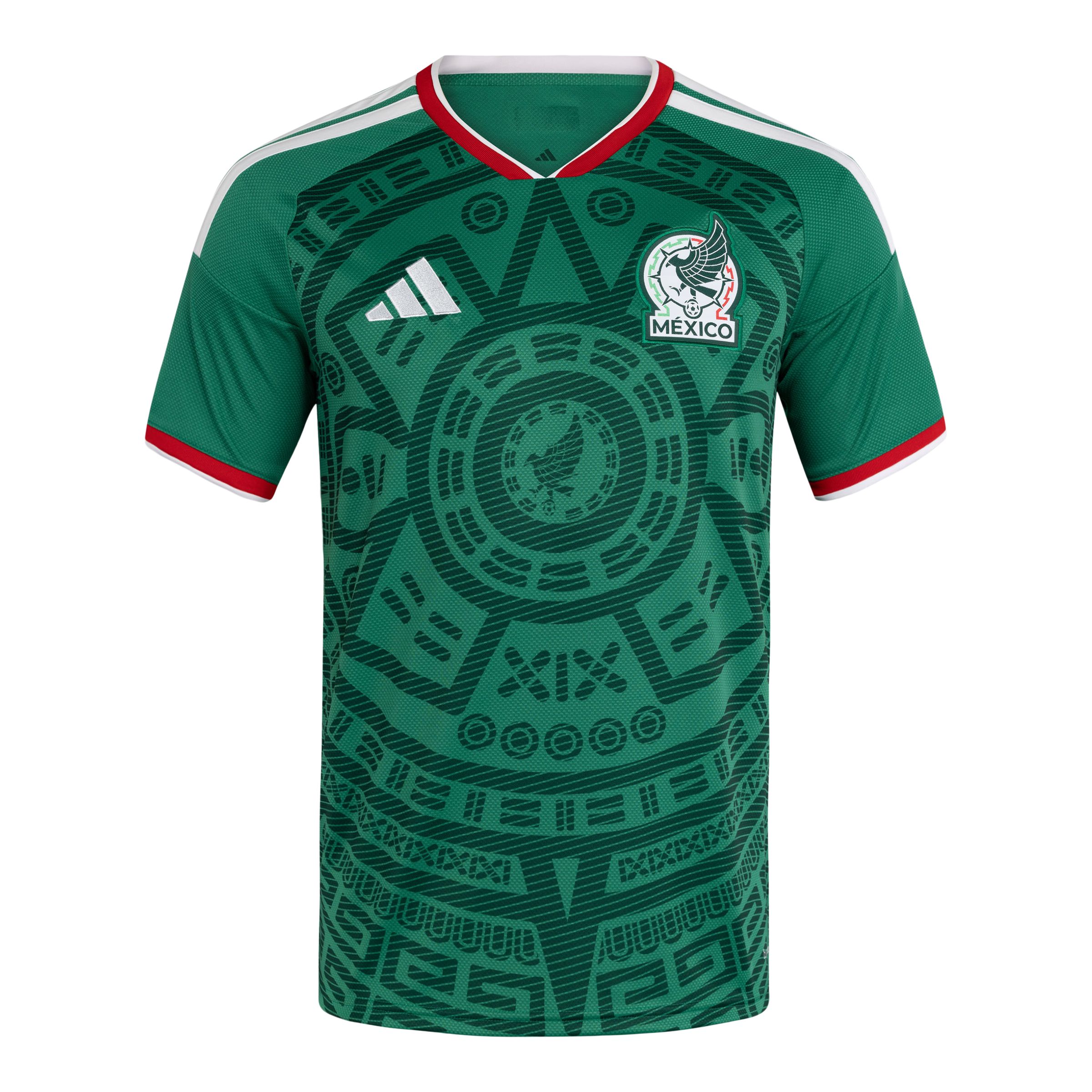
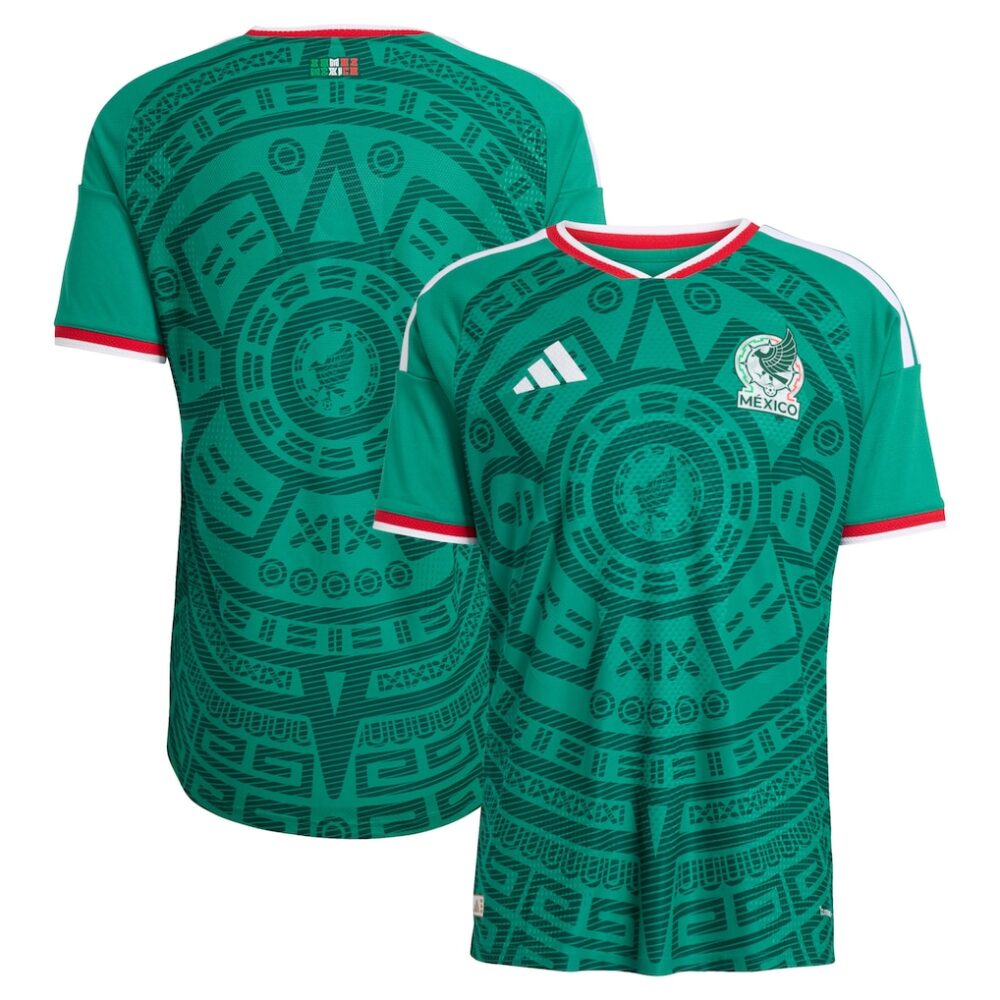
In contrast, the 2022 World Cup jersey, designed by Adidas, took a futuristic approach with digital camouflage. The home jersey used micro-printing technology to create a subtle, pixelated pattern that shifted between green, white, and red depending on the light. This effect was achieved through Adidas’s "Primeblue" fabric, which combined recycled polyester with performance-enhancing properties. The away jersey retained the classic striped design but introduced transparent panels—a nod to Mexico’s tropical climate—while the third jersey featured a bold, monochromatic green with holographic stripes, echoing the 2002 design’s innovation.
The 2018 and 2022 jerseys exemplify Mexico’s ability to modernize tradition. While the 2018 kit celebrated heritage, the 2022 jersey embraced digital-age aesthetics, proving that Mexico’s kits could evolve without losing their soul. Both designs were praised for their functionality, with players like Hirving Lozano and Edson Álvarez highlighting the lightweight materials and enhanced mobility. The 2022 jersey’s digital camouflage also sparked conversations about sustainability, as Adidas emphasized its eco-friendly production process.
Side-by-Side Visual Comparison: Home vs. Away Jerseys Across World Cup Eras
Mexico’s home and away jerseys often serve as visual opposites, each telling a distinct story while maintaining a cohesive national identity. Below is a text-based comparison of key World Cup years, highlighting differences in materials, colors, and cultural nods:
- 2006 World Cup (Adidas) - Home Jersey: Green with white stripes, polyester blend for durability, three-stripe Adidas logo in silver foil. The sleeves featured subtle Mexican flag motifs, and the collars were reinforced for high-wear areas. - Away Jersey: White with green and red accents
Where to Buy Mexico World Cup Jerseys: Authentic vs. Counterfeit
The Mexico national football team’s World Cup jerseys are more than just sports apparel—they are symbols of national pride, cultural identity, and athletic legacy. For fans eager to own a piece of history, purchasing an authentic jersey ensures quality, ethical support for the team, and a genuine connection to the tournament. However, the rise of counterfeit merchandise poses significant risks, from poor craftsmanship to legal repercussions. Navigating the market requires knowledge of official retailers, authentication techniques, and the ethical implications of supporting legitimate sources. This section explores the trusted platforms for acquiring Mexico World Cup jerseys, how to verify authenticity, and the consequences of engaging with counterfeit sellers.
Official Retailers for Mexico World Cup Jerseys and Their Policies
Mexico’s World Cup jerseys are primarily manufactured and distributed by Nike, the official kit provider since 2010, replacing Adidas. Official retailers include: - Nike’s Official Website (Nike.com): Offers authentic jerseys with tracking, warranties, and secure checkout. Shipping is available globally, with returns accepted within 30 days for unused items (original tags included). Policies vary by region, with some countries offering extended warranties. - FIFA Store (FIFA.com/Store): Curated selection of official team jerseys, including limited-edition World Cup designs. Provides COA (Certificate of Authenticity) with purchases and international shipping. Return windows typically range from 14 to 30 days. - Mexico’s Official Football Federation (FMF) Stores: Physical and online outlets (e.g., Tienda Oficial de la FMF) sell jerseys with direct support to local players and infrastructure. Often includes exclusive merchandise not found elsewhere. - Authorized Mexican Sports Retailers: Chains like El Palacio de Hierro, Liverpool, and Sears México partner with Nike to distribute jerseys, offering in-person authentication and local customer service. - Official Team Shops: Some clubs or federations operate pop-up stores during tournaments, selling jerseys with unique packaging and COAs.
Key Policies Across Retailers: - Authenticity Guarantee: All official sellers provide COAs, holograms, or serial-numbered tags. - Shipping: International orders may incur duties; buyers should check customs regulations. - Returns/Exchanges: Typically require original packaging and tags; some retailers offer store credit for defects. - Limited Editions: World Cup jerseys often sell out quickly; early purchases or pre-orders are recommended.
Verifying a Mexico World Cup Jersey’s Authenticity
Counterfeit jerseys flood the market, especially during major tournaments, making authentication critical. Below is a checklist for buyers to assess authenticity based on sewing, materials, logos, and packaging:
Authenticity Checklist for Mexico World Cup Jerseys
- Sewing Quality: - Stitching: Authentic Nike jerseys use flat-lock stitching (visible on seams) with consistent tension. Counterfeits often have loose or uneven stitches. - Thread Color: Should match the jersey’s primary color (e.g., green, white, or gold). Fakes may use mismatched threads (e.g., black stitches on white jerseys). - Label Placement: The Nike Swoosh and Mexico FMF logo should be symmetrically placed on the chest and sleeves. Asymmetry or misalignment indicates a fake.
- Logo and Embroidery: - Team Crest: The Mexican eagle logo on the left chest should be embroidered, not printed. Authentic logos have raised stitching and precise detailing. - Sponsor Logos: Official partners (e.g., Telmex, Bimbo) appear on sleeves or shorts. Counterfeits may omit or distort these logos. - FIFA World Cup Patch: If applicable, the official World Cup patch (e.g., Qatar 2022) should be heat-pressed or embroidered, not stitched poorly.
- Material Tags: - Nike Tags: Located inside the collar or waistband, authentic tags include: - Material Composition: Lists fabrics like polyester, spandex, or recycled fibers with percentages. - Country of Origin: Often "Made in Vietnam" or "Made in China" for Nike jerseys. - Barcode/Serial Number: Should match the jersey’s unique identifier. - Counterfeit Tags: May lack barcodes, use generic "Made in China" without specifics, or have blurry text.
- Packaging: - Box Design: Official Nike boxes have matte finishes, holographic seals, and FIFA/Nike branding. Fakes use glossy paper or generic designs. - Poly Bag: Jerseys come in Nike-branded polybags with the team logo. Counterfeits may use plain bags or incorrect logos. - Invoices/COA: Authentic purchases include a Certificate of Authenticity with a unique number traceable to Nike’s database.
- Weight and Fabric: - Authentic jerseys have a consistent weight (e.g., 200–250g for standard models). Fakes may feel lighter or heavier due to subpar materials. - Fabric Texture: Should be breathable and slightly stretchy. Counterfeits often use cheap polyester that feels stiff or scratchy.
Pros and Cons of Official Stores vs. Third-Party Sellers
Buyers often weigh the convenience of third-party platforms against the risks of counterfeits. Below is a comparison of official retailers and marketplaces like eBay, Amazon, or local vendors:
| Factor | Official Stores (Nike/FIFA/FMF) | Third-Party Sellers (eBay/Amazon/Local Markets) | |||||||||||||||||||||||||||
|---|---|---|---|---|---|---|---|---|---|---|---|---|---|---|---|---|---|---|---|---|---|---|---|---|---|---|---|---|---|
| Price Range | $80–$200 (official), $150–$400 (limited editions). Prices reflect R&D and licensing fees. | $30–$150 (replicas), but often overpriced or underpriced. Risks of hidden fees (shipping, taxes). | |||||||||||||||||||||||||||
| Quality | Premium materials, durable stitching, official certifications. Longevity of 2–5 years with care. | Varies widely—some replicas are decent, but most use toxic dyes, weak seams, or non-breathable fabrics. | |||||||||||||||||||||||||||
| Availability | Limited stock, especially for World Cup editions. Requires early purchases or pre-orders. | High availability but high risk of fakes. Sellers may list "authentic" items without verification. | |||||||||||||||||||||||||||
| Return Policy | 30-day returns/exchanges with original packaging. Some offer lifetime warranties for defects. | No guarantees. Many sellers refuse returns or offer "buyer’s remorse" policies only. | |||||||||||||||||||||||||||
| Authentication | COA, serial numbers, and Nike’s anti-counterfeit tracking. Physical stores allow in-person checks. | No verification. Buyers rely on seller reviews, which can be manipulated. | |||||||||||||||||||||||||||
| Shipping and Delays | Tracked shipping with insurance. Delays may occur during peak seasons (e.g., World Cup). | Unreliable tracking, customs holds, or lost packages. International sellers may avoid refunds. | |||||||||||||||||||||||||||
| Ethical Impact | Supports Mexican players, Nike’s workforce, and local economies. Funds infrastructure (e.g., youth academies). | Undermines legitimate businesses, exploits workers in counterfeit factories, and funds illegal operations in some cases. | |||||||||||||||||||||||||||
| Best For | Collectors, official fans, and those seeking long-term value. Ideal for gifting or resale. | Budget-conscious buyers unaware of risks. May attract scalpers reselling official stock at inflated prices. | |||||||||||||||||||||||||||
Where to BuyStyling Mexico World Cup Jerseys: Fashion Beyond the Pitch
Mexico’s World Cup jerseys transcend their athletic origins, becoming versatile symbols of national pride and streetwear culture. The iconic green, white, and red colors—paired with bold designs—offer endless possibilities for fashion-forward individuals. Whether worn as casual streetwear, incorporated into high-fashion ensembles, or customized through DIY techniques, these jerseys blend sporty authenticity with artistic expression. Their gender-neutral appeal and adaptability across seasons make them a staple in modern wardrobes, from urban outings to red-carpet moments.
The evolution of Mexico’s jerseys in fashion reflects a global trend where athletic apparel merges with lifestyle branding. Designers and celebrities have embraced the aesthetic, transforming jerseys into statement pieces. Meanwhile, fans repurpose them through creative modifications, ensuring each jersey carries a unique story. This fusion of sport, culture, and style underscores the jersey’s role as more than just attire—it’s a canvas for personal and collective identity.
Casual Streetwear Outfits Featuring Mexico World Cup JerseysMexico’s jerseys effortlessly elevate everyday looks, blending comfort with bold visuals. The home jersey (green with white accents) and away jersey (white with red details) serve as neutral yet striking bases for seasonal styling. For spring/summer, pair the home jersey with lightweight denim shorts, white sneakers (e.g., Adidas Stan Smiths or Nike Air Forces), and a crossbody bag in neutral tones. The contrast between the jersey’s vibrant green and the minimalist accessories creates a fresh, athletic vibe. In autumn/winter, layer the away jersey over a black turtleneck, tuck it into dark-wash jeans, and add chunky sneakers (like New Balance 990s) or lug-sole boots for a streetwear edge. A red or green beanie ties the colors together, reinforcing the jersey’s theme. For monochrome contrast, the third jersey (often red or navy) works well with gray sweatpants, black leather sneakers, and a denim jacket—ideal for cooler weather. Accessories like a silver chain necklace or oversized sunglasses add urban flair without overpowering the jersey’s design.Accessories That Complement Mexico JerseysAccessories elevate a Mexico jersey from sporty to stylish, harmonizing with its color palette. Watches with green or red leather straps (e.g., Timex Weekender or Casio Edifice) mirror the jersey’s hues, while metal-toned timepieces (silver or gold) provide a sleek contrast. For hats, a fitted baseball cap in white or green (branded or custom-embroidered with the Mexico logo) keeps the look cohesive, whereas a red bucket hat adds a pop of color for a bold statement. Belts should match the jersey’s dominant color—green leather belts with the home jersey or red belts with the away jersey—while buckles can feature subtle metallic accents. Socks play a subtle role: white or red ankle socks with sneakers, or striped socks peeking above boots for a retro touch. Jewelry like minimalist hoop earrings or chain bracelets in silver or gold complements the jersey’s sporty-meets-streetwear aesthetic. For footwear, clean white sneakers (e.g., Puma Suede or Vans Old Skool) keep the look casual, while leather boots (like Chelsea or combat styles) add sophistication. Sandal options (e.g., Birkenstocks or Tevas) work for summer, especially with the home jersey and linen pants.High-Fashion Collaborations and Celebrity EndorsementsMexico’s World Cup jerseys have become muse pieces in high fashion, collaborating with brands and celebrities to redefine athletic wear. Versace and Puma have featured Mexico-inspired designs in their collections, blending the jersey’s bold colors with luxury fabrics and avant-garde cuts. For instance, a Versace x Mexico capsule collection introduced green velvet jerseys with embroidered national motifs, worn by models at Milan Fashion Week. Celebrities have further cemented the jersey’s status as a fashion staple. Bad Bunny, known for his eclectic style, sported a custom Mexico jersey during a 2023 performance, pairing it with oversized jeans and gold chains for a hip-hop-meets-streetwear fusion. Alejandro Fernández, Mexico’s iconic singer, often incorporates jerseys into his stage outfits, layering them with tailored blazers or leather vests for a rockstar vibe. Eiza González and Demi Lovato have also been spotted wearing Mexico jerseys at events, proving their unisex appeal. Designer interpretations include Rick Owens’ deconstructed jersey jackets and Balenciaga’s oversized, graphic-printed versions. These collaborations highlight the jersey’s potential to transcend sport, becoming a luxury statement piece in global fashion.Versatility of Home vs. Away Jerseys in FashionThe home jersey (green and white) dominates streetwear due to its bold, eye-catching colors, making it ideal for casual outings, festivals, or sports bars. Its versatility allows pairing with dark denim, black leather jackets, or white hoodies for a layered look. The away jersey (white with red accents) offers a cleaner, more formal aesthetic, suitable for business-casual settings or evenings out. It pairs well with black trousers, loafers, or red ties for a preppy-meets-sporty hybrid. For formal events, the third jersey (often red or navy) serves as a dressier alternative, especially when paired with tailored trousers or a blazer. The away jersey is more popular in urban fashion, while the home jersey reigns in streetwear and pop culture. Designers often favor the away jersey for high-fashion looks due to its neutral base, which allows for more creative layering.Luxury Mexico Jersey Mood Board: A High-End AestheticA luxury Mexico jersey outfit merges sporty authenticity with high-fashion opulence. The centerpiece is a custom-embroidered Mexico away jersey in white with red and gold accents, sourced from Puma’s elite collection or a bespoke tailor. Layer it over a black silk button-down shirt (e.g., Ralph Lauren Polo) and pair with tailored black trousers (e.g., Brioni or Canali). For footwear, opt for polished black loafers (e.g., Gucci Ace or Saint Laurent) or gold-tipped Chelsea boots (e.g., Bottega Veneta). Accessories include:Gender-Neutral Appeal of Mexico Jerseys in FashionMexico’s World Cup jerseys have long been celebrated for their unisex design, appealing to men, women, and non-binary individuals alike. The loose fit and bold graphics make them androgynous by nature, allowing for personalized styling. Women often pair jerseys with high-waisted jeans, skirt-and-legging combos, or leather pants, accessorizing with statement necklaces or red lipstick to complement the colors. Non-binary and gender-fluid stylists might layer jerseys under oversized blazers or pair them with pleated skirts and chunky boots for a gender-neutral silhouette. Men frequently style jerseys with slim-fit jeans,Mexico World Cup Jerseys in Pop Culture and Collectibles: Where Sport Meets Art, Politics, and IdentityMexico’s World Cup jerseys transcend their athletic purpose, embedding themselves into global pop culture as symbols of pride, resistance, and artistic expression. From blockbuster films to underground murals, these jerseys serve as visual shorthand for Mexican identity, diasporic struggles, and even political dissent. Their presence in music, documentaries, and digital collectibles reflects how sportswear becomes a canvas for cultural narratives, blending tradition with modernity. Beyond the stadium, Mexico’s jerseys are repurposed into statements—whether in protest marches, street art, or high-profile celebrity endorsements—demonstrating their enduring relevance across media and movements.Cinematic and Digital Appearances: Jerseys as Storytelling DevicesMexico’s World Cup jerseys have featured prominently in films, TV shows, and video games, often symbolizing themes of ambition, heritage, and underdog narratives. In Goal! The Dream Begins (2005), the iconic 1998 jersey—worn by Kuno Becker’s character—becomes a metaphor for the immigrant dream, aligning with Mexico’s global diaspora. The jersey’s vibrant green and white colors contrast with the film’s European setting, reinforcing themes of cultural displacement and belonging. Similarly, in The Two Escobars (1993), the documentary-style film explores the intersection of soccer, politics, and violence in Colombia, where Mexican players like Andrés Escobar (though Colombian, his tragic fate resonated deeply in Mexico) are referenced through jerseys as symbols of both glory and tragedy. Video games have also leveraged Mexico’s jerseys for cultural immersion. In FIFA and eFootball series, Mexico’s kits are meticulously recreated, often accompanied by in-game narratives highlighting the team’s history, such as the 1970 and 1986 triumphs. The 2018 FIFA game included a dynamic camera feature during Mexico’s World Cup matches, where jerseys like the adidas-predictor design became interactive elements, blending virtual and real-world fandom. On television, shows like Narcos (Season 3) subtly incorporate Mexican soccer culture, with jerseys appearing in scenes depicting the 1986 World Cup as a backdrop to Colombia’s turbulent political climate.Musical Crossovers: Jerseys as Lyric and Stage SymbolsMusic has long used Mexico’s World Cup jerseys as visual and thematic motifs, from regional Mexican bands to global artists. Santana’s 1999 hit "Corazón Espinado" features the singer in a green Mexico jersey during live performances, merging Latin rock with national pride. The jersey’s bold stripes become a stage prop, reinforcing the song’s themes of love and homeland. Natalia Lafourcade, a modern icon of Mexican music, has worn Mexico jerseys in music videos and interviews, often pairing them with traditional traje charro elements to blend contemporary and folkloric aesthetics. Regional Mexican bands like Los Tigres del Norte and Maná have also incorporated jerseys into their imagery. Maná’s 2002 album Revolución de Amor includes a cover photo where the band members wear 1998 World Cup jerseys, symbolizing unity and resilience amid political unrest in Mexico. In corridos tumbados, a subgenre of narcocorrido, jerseys are sometimes referenced as metaphors for loyalty and betrayal, reflecting the complex relationship between soccer and organized crime in Mexican culture. Even international artists like Beck have worn Mexico jerseys during performances, such as his 2006 show in Mexico City, where the jersey became a statement of cultural solidarity.Documentaries and Films: Jerseys as Historical ArtifactsSports documentaries frequently use Mexico’s World Cup jerseys to anchor narratives about the team’s legacy and the socio-political contexts of their eras. Pelé (2016), while focused on Brazil, includes scenes where Mexico’s 1970 jersey is discussed as part of the World Cup’s golden age, highlighting how the tournament united nations under shared sporting excitement. The documentary The Class of ’70 (2014) explores the 1970 World Cup team’s impact, with jerseys serving as tangible connections to that era’s triumphs, such as the iconic green-and-white stripes worn by players like Javier Valdivia. In Mexico: The Impossible Dream (2006), a BBC documentary, the 1986 jersey—designed by adidas with its distinctive red collar—is central to the story of Mexico’s first-ever World Cup quarter-final appearance. The jersey’s bold design reflects the team’s aggressive, youthful energy, embodying the Mexicanazo spirit. These films treat jerseys not just as clothing but as historical relics, preserving the emotional and cultural weight of each tournament.Art Installations and Murals: Jerseys as Canvases for Social MessagesPublic art worldwide has repurposed Mexico’s World Cup jerseys to convey messages beyond sport, often addressing immigration, unity, and protest. In Los Angeles, the La Placita mural project features a section where a 1998 World Cup jersey is integrated into a larger piece depicting Mexican immigrants’ journeys. The jersey’s colors contrast with the mural’s earthy tones, symbolizing hope and resilience. Similarly, in Berlin’s Kreuzberg district, street artist El Mac created a mural in 2017 where a Mexico jersey is superimposed over a map of migrant routes, titled "El Camino del Tri." The piece critiques xenophobia while celebrating Mexican culture as a unifying force. In Mexico City, the Muro del Chopo includes a mural by Dr. Lakra where a 2018 World Cup jersey is merged with indigenous patterns, titled "Tri Color: Raíces y Futuro." The artwork critiques the commercialization of soccer while reclaiming the jersey as a symbol of indigenous heritage. These installations transform jerseys into political tools, using their visibility to spark conversations about identity and justice.Celebrities, Athletes, and Influencers Wearing Mexico Jerseys in PublicMexico’s World Cup jerseys have been adopted by high-profile figures, turning them into fashion statements and cultural homages. Below is a curated table of notable appearances, emphasizing their context and significance:
|
Leave a Comment
Comments are moderated before appearing. The data you submit is processed according to the Privacy Policy of Vetlife Archive.