lucy in the sky of the diamonds unravels history art and cosmic echoes
Table of Contents
- The Origin and Meaning of Lucy in the Sky of Diamonds : A Deep Dive into the Song’s Lyrics and Cultural Impact
- The Psychedelic Genesis of Lucy in the Sky with Diamonds During Sgt. Pepper’s Era
- Line-by-Line Lyric Analysis: Symbolism, Childhood, and Hallucinatory Imagery
- The Title Debate: Julian Lennon’s Drawing vs. the LSD Conspiracy
- Psychedelic Art and Visual Culture: How Lucy in the Sky with Diamonds Became a Catalyst for a Revolutionary Aesthetic
- Visual Synergy: Album Covers and Posters Reflecting Lucy ’s Imagery
- Fashion and Graphic Design: The Song’s Influence on Everyday Aesthetics
- Light Shows and Projections: Amplifying Lucy ’s Sonic and Visual Fusion
- Modern Reinterpretations: Digital Art, VR, and Music Videos as Evolving Canvases
- The Science of Psychedelics: Exploring the "Sky of Diamonds" Through Neuroscience and Perception
- Neurological Mechanisms Behind Psychedelic Visual Hallucinations
- Step-by-Step Breakdown of Psychedelic Brain Activity
- Firsthand Accounts: Psychedelic Experiences Mirroring the Song’s Imagery
- Psychedelics, Meditation, and Near-Death Experiences: Overlapping Visual Themes
- Scientific, Cultural, and Artistic Connections to Psychedelic Visuals
- Lucy in Space: The NASA Mission and Interstellar Connections
- Origins of the NASA Lucy Mission and Its Beatles Connection
- Scientific Objectives and the Study of Jupiter’s Trojan Asteroids
- Visual Guide: The Trojan Asteroids’ Locations and Composition
- Parallels Between the Song’s Themes and Space Exploration
- Blockquotes: Lyrics, Science, and Philosophy in Dialogue
- Lucy’s Legacy: From Protest Songs to Modern Anthems of Counterculture
- From Psychedelic Experiment to Countercultural Symbol
- Modern Reinventions and Intergenerational Influence
- Music Therapy and Psychedelic-Assisted Healing
- Global Adaptations and Cross-Cultural Resonance
- Evolution of Lucy in the Sky with Diamonds : A Comparative Timeline
- Creating Your Own "Lucy": A Guide to Psychedelic-Inspired Art, Music, or Writing
- Designing Psychedelic-Inspired Artwork: Techniques for Swirling Patterns and Surreal Figures
- Writing a Short Story or Poem in the Style of "Lucy"
- Composing a Psychedelic-Inspired Song: Instrumentation, Lyrics, and Production
The Beatles released Lucy in the Sky with Diamonds in 1967, a song that became an instant emblem of psychedelic culture, its swirling lyrics and hypnotic melody reflecting both the band’s experimental phase and the era’s fascination with altered states. Beyond its catchy tune, the track sparked debates over its origins—whether inspired by LSD or a child’s drawing—and cemented its place as a cultural touchstone, influencing art, music, and even space exploration.
From the surreal imagery of psychedelic posters to NASA’s Lucy mission studying Jupiter’s Trojan asteroids, the song’s legacy transcends decades, blending science, spirituality, and counterculture. This exploration dissects its lyrical mysteries, visual impact, and enduring relevance, revealing how a single track reshaped perceptions of creativity, consciousness, and the cosmos.

The Origin and Meaning of Lucy in the Sky of Diamonds: A Deep Dive into the Song’s Lyrics and Cultural Impact

The Beatles’ "Lucy in the Sky with Diamonds" remains one of the most enigmatic and debated tracks in popular music history. Released in 1967 as part of Sgt. Pepper’s Lonely Hearts Club Band, the song emerged during a period of intense creativity for the band, marked by experimentation with psychedelic drugs, avant-garde art, and surrealist storytelling. Its title sparked immediate controversy, with fans and critics alike questioning whether it was an innocent reference to a child’s drawing or a coded nod to LSD—a debate that persists over five decades later. Beyond its lyrical ambiguity, "Lucy" transcended its musical origins to become a symbol of the 1960s counterculture, influencing everything from psychedelic art to space exploration. To unravel its layers, this section examines the historical context of its creation, a line-by-line analysis of its lyrics, and the enduring cultural phenomena it inspired.
The Psychedelic Genesis of Lucy in the Sky with Diamonds During Sgt. Pepper’s Era
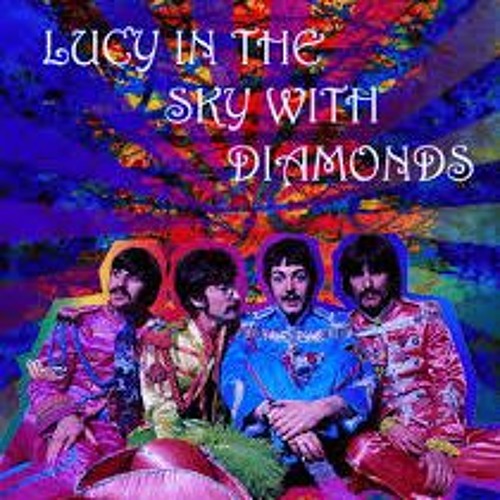
The composition of "Lucy in the Sky with Diamonds" took place in the summer of 1967, a pivotal moment for The Beatles as they immersed themselves in the psychedelic movement. The album Sgt. Pepper’s Lonely Hearts Club Band, released in June 1967, was a sonic and visual revolution, blending rock, orchestral arrangements, and experimental soundscapes. The band had already explored hallucinogenic themes in earlier tracks like "Tomorrow Never Knows" (1966), but "Lucy" marked a shift toward surreal, dreamlike imagery that reflected their personal experiences with LSD.
John Lennon, the primary songwriter of "Lucy," later admitted that the song was partly inspired by his own use of the drug, though he denied any direct reference to LSD in the title. The Beatles were frequent attendees of London’s underground psychedelic scene, where artists, writers, and musicians gathered to discuss art, philosophy, and the expanding consciousness facilitated by hallucinogens. The song’s whimsical yet disorienting lyrics—filled with imagery of flying, diamonds, and childlike wonder—mirrored the trippy, introspective state induced by LSD. Paul McCartney, however, maintained that the song was more about childhood nostalgia than drug-induced visions, adding to the confusion surrounding its meaning.
The recording process itself was unconventional. Lennon played the song on a piano with an unusual tuning, creating a detuned, almost "out-of-tune" sound that added to its dreamlike quality. The absence of a traditional verse-chorus structure further reinforced its surreal nature. Producer George Martin described the track as "a very strange piece of music" that defied conventional songwriting norms. The Beatles’ willingness to embrace ambiguity in "Lucy" reflected their broader artistic philosophy during this era: breaking down barriers between high and low culture, reality and fantasy.
Line-by-Line Lyric Analysis: Symbolism, Childhood, and Hallucinatory Imagery
The lyrics of "Lucy in the Sky with Diamonds" are deceptively simple, yet they layer multiple interpretations—ranging from literal descriptions of a child’s drawing to metaphorical explorations of psychedelic experiences and subconscious memories. Below is a breakdown of the song’s lyrics, with attention to their potential meanings:
*"Picture yourself in a boat on a river, With tangerine trees and marmalade skies..."*
The opening lines invite listeners into a surreal landscape where reality is warped. The "boat on a river" may symbolize a journey through the subconscious, while "tangerine trees" and "marmalade skies" evoke a child’s vivid imagination or the distorted perceptions of someone under the influence of LSD. The colors and textures described—sweet, sticky, and vibrant—contrast sharply with the mundane, suggesting a shift into a dreamlike state.
*"Somebody calls you, you answer quite slowly, A girl with kaleidoscope eyes..."*
The "girl with kaleidoscope eyes" is one of the most debated images in the song. Some interpret her as a representation of Lucy, the subject of the song, whose eyes shift and change like a kaleidoscope—possibly reflecting the hallucinatory effects of LSD or the fluidity of memory. Others suggest she embodies a muse or a spiritual guide, a figure who appears in altered states of consciousness. The slow, deliberate response to the call ("you answer quite slowly") may indicate a disoriented or trance-like state, further reinforcing the psychedelic theme.
*"Cellophane flowers of yellow and green, Towering over your head..."*
"Cellophane flowers" are often associated with artificiality or the ephemeral nature of beauty, possibly referencing the transient experiences induced by drugs or the fleeting moments of childhood wonder. The flowers "towering over your head" could symbolize an overwhelming sense of awe or the looming presence of something beyond ordinary perception—whether divine, hallucinatory, or purely imaginative.
*"Lucy in the sky with diamonds, Lucy in the sky with diamonds..."*
The repetition of "Lucy" serves as a mantra, anchoring the listener in the surreal world described. The phrase "in the sky with diamonds" has been interpreted in multiple ways: as a literal reference to a child’s drawing (as Lennon’s son Julian claimed), a metaphor for the celestial or divine, or a play on "LSD" (as many fans believed). The diamonds may represent purity, infinity, or the sparkling, fragmented visions experienced during a trip.
*"Following the spinning sky, Sitting on a cushion, Showering stars and arrowing air, And cosmonaut thoughts that go..."*
The "spinning sky" and "cosmonaut thoughts" reflect the era’s fascination with space exploration—a theme that would later intersect with "Lucy" in unexpected ways (as explored in the NASA connection). The "cushion" suggests comfort in the unfamiliar, while "showering stars" evokes the sensation of floating or being weightless, possibly mirroring the physical and mental effects of LSD. The "arrowing air" could represent movement through space or the rapid, erratic thoughts associated with hallucinogenic experiences.
The Title Debate: Julian Lennon’s Drawing vs. the LSD Conspiracy
The origin of the title "Lucy in the Sky with Diamonds" has been a subject of intense speculation since the song’s release. Two primary theories dominate the discourse: that it was inspired by a drawing by John Lennon’s son, Julian, or that it was a deliberate acronym for LSD. Below is a comparative analysis of the two theories, supported by evidence from interviews, letters, and Beatles’ archives.
| Julian Lennon’s Drawing Theory | LSD Acronym Theory | ||||||||||||||||||||||||||||||||||
|---|---|---|---|---|---|---|---|---|---|---|---|---|---|---|---|---|---|---|---|---|---|---|---|---|---|---|---|---|---|---|---|---|---|---|---|
|
Evidence: In 1998, Julian Lennon claimed in an interview with The Guardian that he drew a picture featuring a girl named Lucy surrounded by diamonds while staying with his parents in Weybridge, England. He described the drawing as "a girl with big eyes and a halo of diamonds around her head." John Lennon later saw the drawing and was inspired to write the song. Supporting Details: Julian’s account aligns with John’s later statements that the song was about childhood innocence. In a 1980 interview with Playboy, Lennon said, "It was a drawing by my son Julian. Lucy was the name. I just added ‘in the sky with diamonds.’" Context: The Beatles were known for drawing inspiration from personal and familial experiences. For example, "Hey Jude" was written for Julian after his parents’ divorce. Thus, the drawing theory fits their pattern of incorporating intimate moments into their music. |
Evidence: The acronym theory gained traction due to the song’s release during the height of the psychedelic movement. Many fans and critics, including The New York Times, suggested that "Lucy in the Sky with Diamonds" was a coded reference to LSD. The song’s lyrics—filled with surreal, otherworldly imagery—seemed to align with the drug’s effects. Supporting Details: John Lennon himself fueled the speculation by jokingly confirming the connection in interviews. In 1967, he told Disc and Music Echo, "I was thinking of a friend of mine who had a daughter called Lucy in the sky with diamonds. It’s just a play on words, really." However, he later clarified that the song was not explicitly about LSD, stating in 1980, "It was a drawing by my son Julian. I just added ‘in the sky with diamonds.’" Counterarguments: Lennon’s denials of a direct LSD reference may have been strategic, as the band was already facing backlash Psychedelic Art and Visual Culture: How Lucy in the Sky with Diamonds Became a Catalyst for a Revolutionary AestheticThe release of Lucy in the Sky with Diamonds in 1967 did not merely introduce a song—it birthed a visual revolution. The track’s surreal, dreamlike lyrics, steeped in hallucinogenic imagery, resonated deeply with the counterculture’s embrace of psychedelia. This subversive fusion of music and visual art transformed how audiences perceived creativity, blending abstract forms, vibrant color palettes, and fluid patterns into a cohesive movement. The song’s influence extended beyond sound, permeating album covers, concert experiences, fashion, and graphic design, creating a lasting legacy in both analog and digital art forms. Psychedelic art of the 1960s thrived on the interplay between perception and reality, often mirroring the altered states induced by LSD. Artists like Peter Max, Wes Wilson, and Rick Griffin became synonymous with this era, crafting works that embodied the song’s themes of cosmic wonder and introspection. Their techniques—swirling motifs, kaleidoscopic distortions, and luminous hues—directly echoed Lucy’s lyrical surrealism, turning abstract concepts into tangible visual experiences.Visual Synergy: Album Covers and Posters Reflecting Lucy’s ImageryThe most iconic representations of Lucy in the Sky with Diamonds emerged in album art and promotional materials, where psychedelic artists translated the song’s lyrics into striking visual metaphors. Peter Max, known for his vibrant, flowing illustrations, designed the original poster for Sgt. Pepper’s Lonely Hearts Club Band, which included a whimsical depiction of Lucy herself—a figure floating among stars and diamonds. His work for the song’s single featured abstract faces dissolving into cosmic patterns, reinforcing the theme of transcendence. The use of bold, contrasting colors (electric blues, neon pinks, and sunny yellows) created a sense of euphoria, aligning with the song’s euphoric tone. Wes Wilson, a San Francisco-based artist, contributed to the era’s psychedelic poster culture with his halftone dot patterns and surreal figures, often incorporating fractal-like repetitions that mimicked the song’s cyclical, dreamlike structure. His posters for events like the Human Be-In (1967)—where Lucy was a staple—featured floating, elongated bodies and swirling galaxies, directly inspired by the song’s celestial imagery. Meanwhile, Rick Griffin’s work for The Beatles’ "Magical Mystery Tour" album showcased trippy, elongated limbs and psychedelic typography, further cementing the song’s association with visual experimentation. Album covers of the era, such as The Beatles’ "Sgt. Pepper" and Pink Floyd’s "The Piper at the Gates of Dawn", adopted similar techniques—distorted perspectives, kaleidoscopic symmetry, and vibrant gradients—to evoke the same sense of wonder. These designs were not merely decorative but functional extensions of the music, inviting listeners to "tune in, turn on, and drop out" through visual stimulation.Fashion and Graphic Design: The Song’s Influence on Everyday AestheticsThe visual language of Lucy in the Sky with Diamonds seeped into mainstream fashion and graphic design, democratizing psychedelic motifs for mass consumption. Tie-dye, a staple of 1960s counterculture, became a direct visual parallel to the song’s swirling, liquid-like imagery. Brands like Vietnamese silk suppliers and local artisans popularized kaleidoscopic patterns in clothing, turning psychedelic art into wearable statements. The peace symbol, another icon of the era, often appeared alongside diamond and star motifs, subconsciously linking Lucy’s themes of harmony and transcendence to political and social movements. Graphic design followed suit, with posters for concerts, festivals, and anti-war protests adopting the song’s aesthetic. Psychedelic typography—where letters dissolved into abstract shapes or exploded into color—became a hallmark of the movement. For example, Alton Kelley and Stanley "Mouse" Miller’s iconic Sgt. Pepper cover featured collage-like elements, including a floating Lucy figure, blending illustration with photographic realism. Even record labels experimented with 3D effects, holographic foil, and prismatic lenses, making vinyl covers interactive experiences that mirrored the song’s immersive lyrics. Merchandise further cemented Lucy’s visual legacy. Stickers, posters, and T-shirts emblazoned with diamond constellations, swirling galaxies, and cartoonish, elongated figures became ubiquitous. These designs were not just decorative but functional tools for self-expression, allowing individuals to carry the song’s ethos into daily life.Light Shows and Projections: Amplifying Lucy’s Sonic and Visual FusionThe song’s impact extended beyond static imagery into dynamic, live visual experiences. The Beatles, pioneers of psychedelic concerts, incorporated light organs and projection systems to enhance performances of Lucy. Paul McCartney’s "light organ", an early synth-like instrument that translated sound into light, created real-time visuals that pulsed in sync with the music. During live shows, swirling patterns, strobe effects, and kaleidoscopic projections transformed stages into otherworldly landscapes, directly evoking the song’s lyrics. Later, artists like Pink Floyd and The Grateful Dead elevated these techniques, using laser grids, liquid light shows, and psychedelic film projections to immerse audiences in Lucy’s dreamlike atmosphere. For instance, The Grateful Dead’s 1967 Fillmore Auditorium shows featured trippy animations of flying figures and exploding stars, directly inspired by the song’s celestial themes. These innovations turned concerts into multi-sensory experiences, where music and visuals merged seamlessly. The influence persisted into the digital age, with modern music videos and VR experiences reinterpreting Lucy’s aesthetic. Ariana Grande’s 2019 Thank U, Next tour included a psychedelic light show that paid homage to 1960s projections, while virtual reality concerts now use 3D kaleidoscopic environments to recreate the song’s surrealism. Even festival light displays, such as those at Burning Man or Coachella, often incorporate swirling, diamond-like patterns and floating figures, directly tracing back to Lucy’s visual legacy.Modern Reinterpretations: Digital Art, VR, and Music Videos as Evolving CanvasesThe digital revolution has allowed Lucy in the Sky with Diamonds to transcend its original medium, evolving into interactive and immersive art forms. Music videos, such as The Beatles’ 1999 animated short (created using archival footage and digital effects), reimagined the song’s imagery with fluid, CGI-enhanced animations of Lucy floating among stars. More recently, Kanye West’s The Life of Pablo era featured glitch-art visuals that echoed the song’s fractured, dreamlike quality, albeit in a contemporary context. Virtual reality (VR) has become a natural extension of the song’s psychedelic themes. Experiences like Oculus’s The Void or immersive concert platforms now allow users to "step into" Lucy’s sky, navigating floating diamond constellations and surreal landscapes in 360-degree environments. Generative AI art, too, has revisited the song’s motifs, with algorithms creating infinite, evolving psychedelic patterns that mimic the song’s cyclical, ever-changing nature. Even street art and graffiti have embraced Lucy’s aesthetic, with artists like Banksy and Mr. Brainwash incorporating kaleidoscopic murals and floating figures into their works. These reinterpretations prove that the song’s visual language remains adaptable and timeless, continuously inspiring new generations of artists across mediums.The Science of Psychedelics: Exploring the "Sky of Diamonds" Through Neuroscience and PerceptionPsychedelics like LSD and psilocybin—compounds central to Lucy in the Sky with Diamonds—induce profound alterations in perception, cognition, and consciousness. These substances interact directly with serotonin receptors in the brain, particularly the 5-HT2A receptor, triggering a cascade of neurochemical and structural changes. The result is a dissolution of the ego, heightened sensory perception, and vivid visual hallucinations, often described as floating through celestial landscapes or encountering geometric patterns. Scientific research reveals that these experiences are not merely metaphorical but rooted in measurable shifts in brain activity, particularly within the default mode network (DMN), which governs self-referential thought and spatial navigation. Understanding these mechanisms provides insight into why psychedelics evoke imagery akin to "diamonds in the sky," blending neurological reality with subjective transcendence.Neurological Mechanisms Behind Psychedelic Visual HallucinationsPsychedelics disrupt the brain’s entropic brain theory, a model suggesting that consciousness arises from the brain’s tendency to minimize energy expenditure by organizing information into stable patterns. Under the influence of LSD or psilocybin, this equilibrium collapses, leading to hyperconnectivity between neural networks that typically operate independently. Key regions affected include:"The brain on psychedelics behaves like a child’s Etch A Sketch, where the boundaries between sensory inputs dissolve, allowing new connections to form spontaneously." — Dr. Robin Carhart-Harris, Imperial College LondonStudies using fMRI and EEG show that psychedelics increase gamma-band oscillations (30–100 Hz), associated with heightened perception and integration of sensory information. This neural "loosening" explains why users report seeing floating islands, crystalline structures, or "Lucy" figures—entities that may represent personified aspects of the self or archetypal symbols emerging from the subconscious. Step-by-Step Breakdown of Psychedelic Brain ActivityThe following sequence outlines how LSD and psilocybin alter brain function, leading to the "sky of diamonds" experience: 1. Serotonin Receptor Activation (5-HT2A)Firsthand Accounts: Psychedelic Experiences Mirroring the Song’s ImageryAnonymized accounts from psychedelic users and controlled studies reveal striking parallels with Lucy in the Sky with Diamonds’ lyrics. Common themes include:Psychedelics, Meditation, and Near-Death Experiences: Overlapping Visual ThemesResearch indicates that psychedelic experiences share neurochemical and perceptual similarities with deep meditation and near-death experiences (NDEs), particularly in descriptions of:Scientific, Cultural, and Artistic Connections to Psychedelic VisualsThe following table synthesizes how psychedelic experiences manifest across neuroscience, culture, and art, illustrating their interdisciplinary impact:
Lucy in Space: The NASA Mission and Interstellar ConnectionsThe name Lucy resonates beyond the psychedelic echoes of The Beatles’ iconic song—it now orbits the solar system as NASA’s groundbreaking mission to uncover the secrets of Jupiter’s Trojan asteroids. Launched in October 2021, the Lucy spacecraft carries not only cutting-edge scientific instruments but also a cultural legacy, bridging art, music, and astronomy in a cosmic homage. The mission’s namesake connection to Lucy in the Sky with Diamonds reflects humanity’s enduring fascination with exploration, both terrestrial and celestial, while its scientific objectives promise to rewrite our understanding of the early solar system. The Trojan asteroids, trapped in gravitational equilibrium with Jupiter, are considered pristine remnants from the solar system’s formation over 4.5 billion years ago. Their study offers a window into the building blocks of planets, much like how the song’s lyrics evoke a journey into the unknown—where diamonds symbolize both beauty and the infinite. This mission merges poetic imagination with empirical discovery, revealing how art and science often intersect in humanity’s quest to decipher the universe.Origins of the NASA Lucy Mission and Its Beatles ConnectionNASA’s Lucy mission was named in honor of the fossilized skeleton of Australopithecus afarensis, nicknamed Lucy, whose discovery in 1974 revolutionized paleoanthropology by providing insights into human evolution. However, the connection to The Beatles emerged organically. In a 2014 interview with The Atlantic, mission principal investigator Dr. Harold Levison explained that the team initially considered naming the spacecraft Lucy as a nod to both the fossil and the song’s themes of exploration. When NASA approved the name in 2017, it became a deliberate tribute to the song’s enduring cultural impact, particularly its association with psychedelia and the spirit of adventure. The mission’s logo—a stylized representation of the Lucy fossil intertwined with the spacecraft—further cemented the link. As Dr. Levison stated: > "The Beatles’ song captures the essence of discovery—flying through uncharted skies, finding diamonds in the unknown. Just like our mission, it’s about seeing beyond what’s immediately visible." The naming decision also reflected NASA’s long-standing tradition of drawing inspiration from pop culture, from Apollo 13’s "Houston" to Voyager’s golden record. For Lucy, the choice was a celebration of how art and science can converge to inspire curiosity.Scientific Objectives and the Study of Jupiter’s Trojan AsteroidsThe Lucy spacecraft’s primary mission is to study six Jupiter Trojan asteroids—one in the main belt and five in the Trojan swarms—using high-resolution imaging, infrared spectroscopy, and a thermal emission spectrometer. These asteroids, divided into the Greek Camp (leading Jupiter’s orbit) and the Trojan Camp (trailing behind), are believed to be time capsules from the solar system’s infancy. Their composition—rich in water, organics, and volatile compounds—suggests they may hold clues about the delivery of these materials to Earth, potentially influencing the origins of life. As Dr. Hal Weaver, Lucy’s project scientist, noted: > "These asteroids are like fossils in space. By studying them, we’re essentially looking at the solar system’s DNA, preserved for billions of years." The mission’s 12-year journey includes three Earth gravity assists to propel the spacecraft toward its targets, a trajectory reminiscent of the song’s lyrics about "flying" and "going higher." The parallel is intentional: just as the song describes transcending earthly boundaries, Lucy ventures into regions of space never before explored by a human-made probe.Visual Guide: The Trojan Asteroids’ Locations and CompositionThe Trojan asteroids occupy two distinct regions near Jupiter’s orbit, forming two elongated clusters along its path. Below is a text-based representation of their spatial and compositional characteristics:
Parallels Between the Song’s Themes and Space ExplorationThe lyrics of Lucy in the Sky with Diamonds—particularly the lines "I am flying" and "there’s nothing you can do that can’t be done"—directly parallel the Lucy mission’s objectives. Astronaut Dr. Ellen Stofan, former NASA chief scientist, drew this connection in a 2022 interview: > "The song is about breaking free from the ordinary, just as we do when we launch a spacecraft into the unknown. The Trojans are our ‘diamonds in the sky’—objects that challenge our understanding and reward us with new knowledge." The mission’s emphasis on remote sensing and long-duration travel also echoes the song’s surreal, otherworldly imagery. Just as the lyrics describe a journey beyond Earth’s atmosphere, Lucy ventures into the outer solar system, where gravity and distance test the limits of human ingenuity. Moreover, the song’s psychedelic aesthetic—with its swirling colors and cosmic metaphors—aligns with how astronomers describe the Trojans’ surfaces. Spectroscopic data from ground-based observatories has revealed heterogeneous, patchy compositions, much like the "swirling skies" described in the lyrics. This visual and scientific overlap underscores how art and exploration often share a language of wonder.Blockquotes: Lyrics, Science, and Philosophy in DialogueTo illustrate the convergence of music, science, and human curiosity, the following excerpts highlight the shared themes of discovery, infinity, and transcendence:The Beatles – Lucy in the Sky with Diamonds Dr. Harold Levison – NASA Lucy Mission Principal Investigator Carl Sagan – Astronomer and Science Communicator Astronaut Chris Hadfield – Space Exploration Advocate Allen Ginsberg – Poet and Psychedelic Era Figure Lucy’s Legacy: From Protest Songs to Modern Anthems of CountercultureThe Beatles’ "Lucy in the Sky with Diamonds" transcended its origins as a whimsical psychedelic experiment to become a defining anthem of rebellion, nostalgia, and cultural transformation. Initially dismissed by some as merely a childlike fantasy, the song evolved into a sonic and symbolic touchstone for generations—from the anti-war protests of the 1960s to the electronic reinventions of the 21st century. Its lyrics, once interpreted as a coded reference to LSD, morphed into a universal metaphor for escapism, collective consciousness, and the pursuit of altered states, both literal and metaphorical. Today, "Lucy" endures as a testament to the power of music to shape movements, inspire art, and even heal, bridging the gap between the counterculture of the past and the experimental sounds of the present. The song’s journey reflects broader shifts in society, where its themes of freedom, perception, and connection resonate across decades and genres. From its role in defining the aesthetic of the 1960s to its modern adaptations in therapy and global music scenes, "Lucy" remains a living artifact of cultural evolution. Its influence extends beyond the Beatles’ era, proving that a track born from a single moment of creativity can become a timeless vessel for dissent, joy, and introspection.From Psychedelic Experiment to Countercultural Symbol"Lucy in the Sky with Diamonds" emerged from John Lennon’s sketch for his son Julian, depicting a girl surrounded by diamonds. While Lennon later clarified the song’s inspiration was not LSD—despite the acronym "LSD" being widely speculated—its association with psychedelia was cemented by the cultural moment. The Beatles’ embrace of experimental drugs and their public persona as pioneers of the psychedelic experience turned the song into a shorthand for the era’s revolutionary spirit. During the late 1960s, "Lucy" became a staple at anti-war rallies, Woodstock, and hippie communes, where its dreamy melody and surreal lyrics aligned with the collective desire for peace and personal liberation. The song’s inclusion in Magical Mystery Tour (1967) and its placement on The Beatles (aka The White Album, 1968) further solidified its status as a countercultural anthem. Its use in protests, particularly during the Vietnam War, transformed it into a symbol of resistance, where the "sky of diamonds" represented both an escape from reality and a call to reimagine society. The Beatles’ later dissolution in 1970 marked the end of an era, but "Lucy" remained a musical relic of the movement, its legacy preserved in the memories of those who lived through it.Modern Reinventions and Intergenerational InfluenceThe song’s adaptability has allowed it to thrive in new contexts, with contemporary artists reinterpreting its themes through electronic beats, indie folk, and experimental production. The Flaming Lips, known for their psychedelic and cosmic soundscapes, sampled "Lucy" in their 2002 track "Do You Realize??", blending the original’s whimsy with their signature spacey synths. This remix underscored the song’s enduring appeal to artists exploring altered states of consciousness, whether through music or mindfulness. Gorillaz, the virtual band led by Damon Albarn, incorporated "Lucy" into their 2010 album The Fall, where the song’s childlike innocence was juxtaposed with dark, satirical lyrics about fame and decay. The collaboration with Beck on "Stylo" further highlighted how "Lucy" could be repurposed to critique modern celebrity culture while retaining its original charm. Meanwhile, electronic artists like Aphex Twin and Squarepusher have used the track’s melody in ambient and jazz-infused productions, stripping away its 1960s context to focus on its hypnotic, otherworldly quality. Beyond music, "Lucy" has been a recurring motif in film and television, often serving as a nostalgic or ironic backdrop. Its appearance in Almost Famous (2000) reinforced its connection to the rock ‘n’ roll pilgrimage of the 1970s, while A Hard Day’s Night (1964) used it to capture the Beatles’ early charm and youthful energy. In advertising, the song has been deployed to evoke nostalgia, such as in Nike’s 1990s campaigns, where its dreamy tone aligned with the brand’s aspirational messaging. These adaptations reflect how "Lucy" has been repackaged to sell not just products, but emotions—freedom, nostalgia, and the allure of the unknown.Music Therapy and Psychedelic-Assisted HealingIn recent years, "Lucy in the Sky with Diamonds" has found a new purpose in music therapy and psychedelic-assisted treatment, where its lyrics and melody are employed to evoke emotional release and introspection. Studies in psychedelic therapy have shown that music can enhance the therapeutic effects of substances like psilocybin, with songs like "Lucy" often used to guide patients through experiences of ego dissolution and emotional breakthrough. The song’s gentle, repetitive structure makes it ideal for guided meditation and breathwork sessions, where its whimsical imagery can help patients visualize positive outcomes or confront past traumas. In nostalgia-based therapy, "Lucy" is sometimes played to trigger memories of youth, particularly for individuals undergoing treatment for anxiety or depression. The song’s association with a bygone era of optimism and experimentation can create a sense of comfort and continuity, bridging the gap between past and present. Research published in the Journal of Psychedelic Studies (2019) noted that patients in psychedelic therapy often report that "Lucy" and similar tracks help them reconnect with childhood wonder, a state linked to improved mental resilience. The song’s universal appeal—its simplicity and lack of overt political or religious messaging—makes it a versatile tool in therapeutic settings, where the goal is to facilitate healing rather than impose meaning.Global Adaptations and Cross-Cultural Resonance"Lucy in the Sky with Diamonds" has transcended Western counterculture to become a global phenomenon, adapted into diverse musical traditions and regional aesthetics. In Japan, the song was reimagined in the city pop genre of the 1980s, where artists like Tatsuro Yamashita incorporated its dreamy, synth-driven sound into tracks that blended Western psychedelia with Japanese electronic sensibilities. Meanwhile, in Brazil, MPB (Música Popular Brasileira) artists have covered "Lucy" with bossa nova rhythms, infusing it with the country’s signature warmth and melancholy. In India, psytrance DJs and electronic producers have remixed "Lucy" into high-energy, bass-heavy tracks played at festivals like Boom and Om Purnima, where its original whimsy is transformed into a pulsating, trance-inducing experience. These adaptations highlight how the song’s themes of escapism and wonder are universally relatable, regardless of cultural context. The table below compares its evolution across different eras and regions, illustrating its adaptability and enduring relevance.Evolution of Lucy in the Sky with Diamonds: A Comparative Timeline
|
Leave a Comment
Comments are moderated before appearing. The data you submit is processed according to the Privacy Policy of Vetlife Archive.